Food photos can look “correct” and still feel empty. Clean plate, nice light, sharp focus, and somehow the image reads like a catalogue. In Singapore, where diners are used to watching food being cooked, poured, torched, tossed, and served fast, that missing ingredient is often life.
Adding humans to food photography is not about forcing a lifestyle moment. It is about giving the viewer a sense of scale, warmth, and immediacy. The trick is doing it in a way that feels natural, not staged, not cringe, and definitely not distracting from the dish.
If you are planning a campaign-style shoot, this fits nicely into a bigger concept. For a starting point, refer to our restaurant-friendly shoot framework in this cool photoshoot guide: Cool Photoshoot: The Singapore Playbook For F&B Campaigns That Get Clicks.
Why Human Element Works In Food Photos
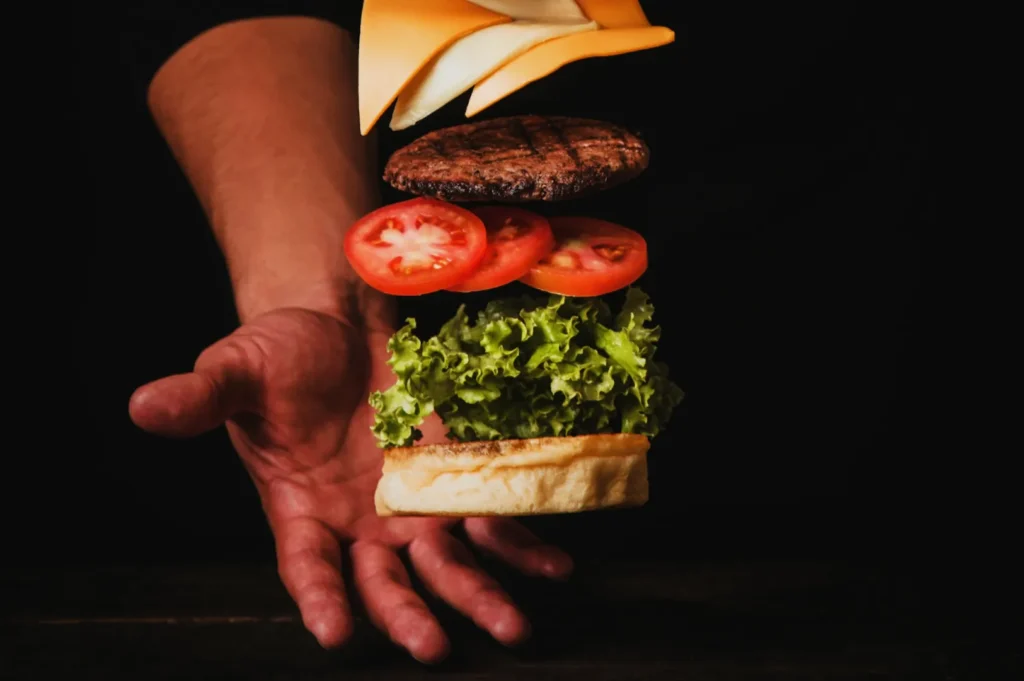
People buy with their imagination. A hand reaching in tells the brain, “This is ready now.” A chef plating signals craft. A group sharing a dish signals abundance.
In practical terms, the human element helps you:
- Show scale without writing “large portion” in captions
- Make the food feel fresh because action implies timing
- Build trust by showing real service, real hands, real movement
- Differentiate your brand when every competitor is posting the same clean overhead shot
For Singapore concepts, it also helps you stay culturally honest. A hawker dish photographed like a fine dining still life can feel off. A small human cue brings it back to everyday reality.
Choose The Right “Human”, Not The Most Obvious One
If you have ever tried to direct staff to “look natural,” you know how quickly it becomes awkward. The solution is simple: choose the least intrusive human presence that still tells the story.
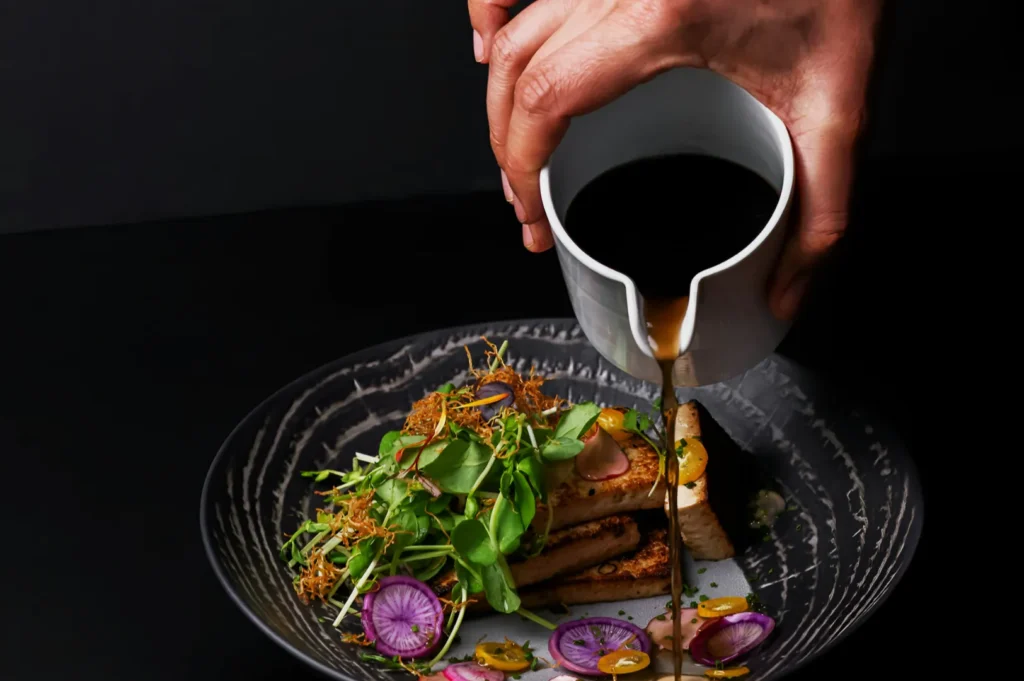
Option 1: Hands Only (The Safest, Most Useful)
Hands work because they add life without turning the photo into portrait photography. You can keep faces out, protect privacy, and stay focused on the main subject.
Best use cases:
- Sauce pour, noodles lift, cheese pull, garnish sprinkle
- Coffee hand-off at the pass
- Chopsticks picking up one piece from a sharing plate
Option 2: Chef In Action (Craft, Not Performance)
A chef’s hands plating, torching, wiping the rim, or slicing meat communicates skill. It reads premium without shouting.
Best use cases:
- Open-kitchen restaurants
- Signature dish moments
- Fine dining, chef-driven concepts, tasting menus
Option 3: Diners And Sharing (Only If It Matches Your Brand)
A group clinking glasses can work for casual dining, brunch, izakaya concepts, and anything social-first. It rarely works for brands that sell calm, quiet, minimalism.
Best use cases:
- Zi char spreads
- Weekend brunch tables
- Group dining set menus
The “Not Awkward” Direction: Give Hands A Job
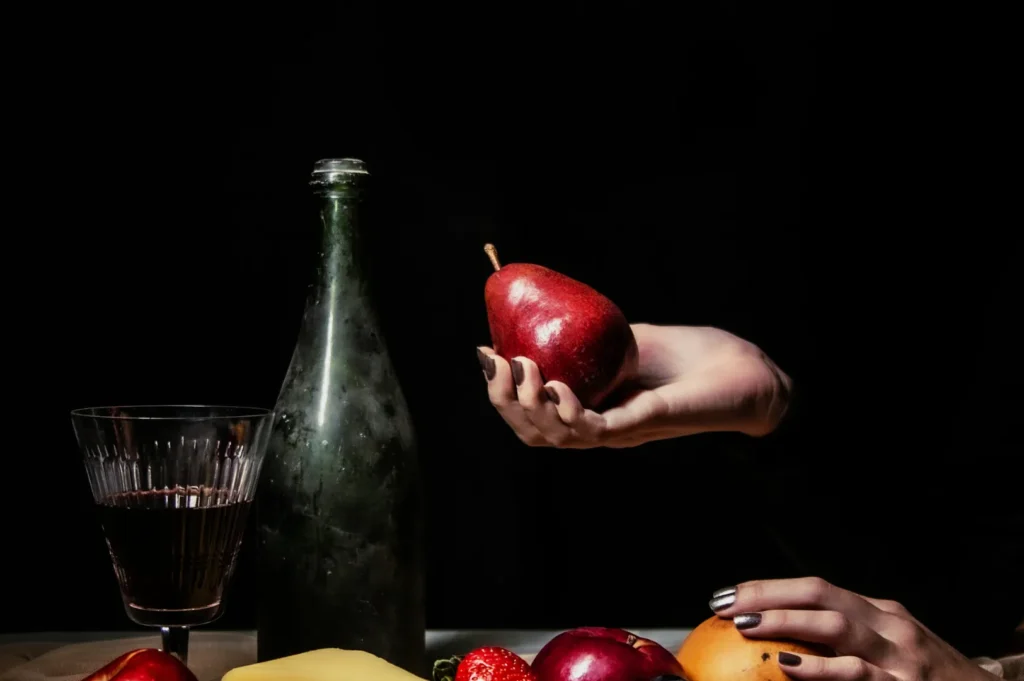
The fastest way to make a hand look weird is to ask someone to “hold this” with no purpose. The hand needs a believable task.
Try these prompts during a shoot:
- “Pick up the first bite like you would normally.”
- “Pour until you would stop in real service.”
- “Tear it open, then pause for one second.”
- “Stir once, then stop.”
- “Slide the plate forward like you are serving it.”
That one-second pause is everything. It is the difference between motion blur chaos and a usable frame that still feels alive.
Composition Tricks That Keep The Food As The Main Subject
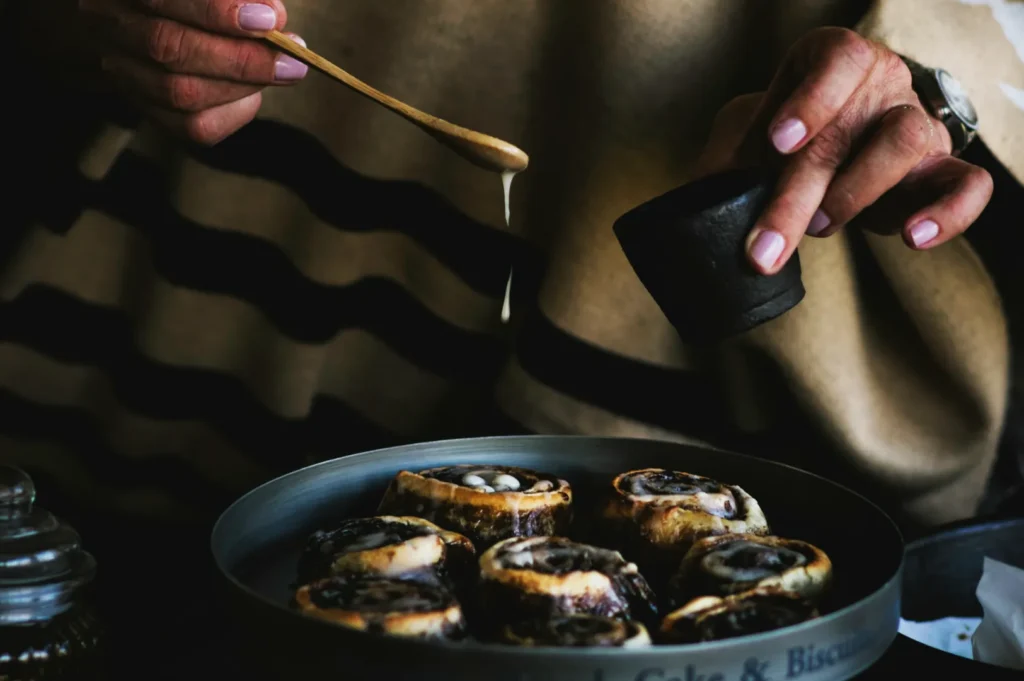
Humans are visually dominant. If you do not control the frame, the hand becomes the hero instead of the dish.
Keep The Hand At The Edge
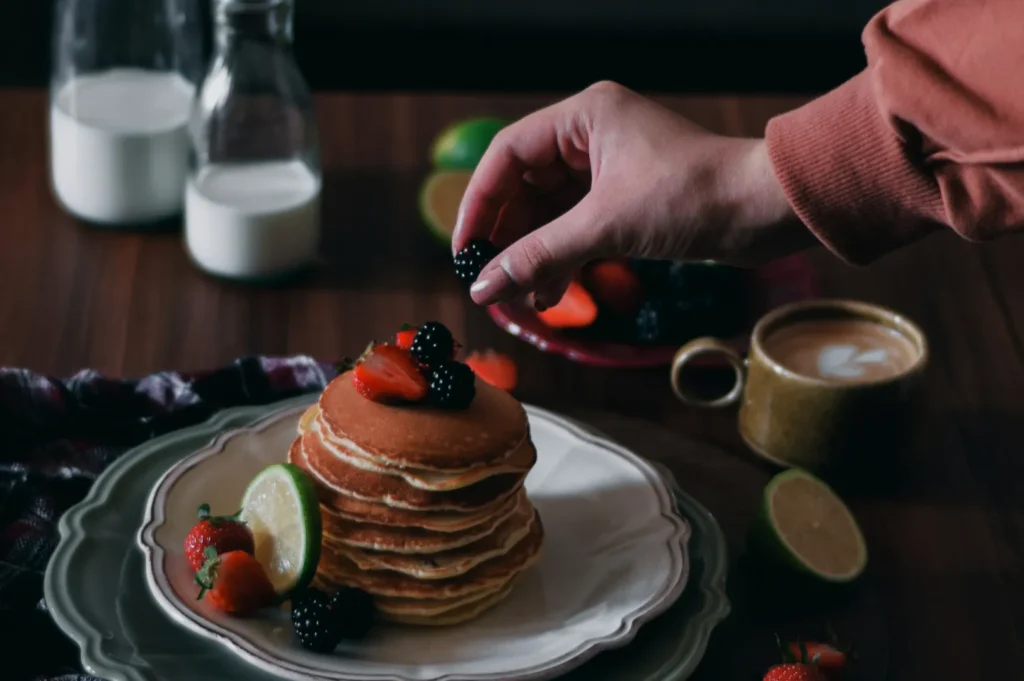
Hands work best entering from the side, not centered. Let the hand lead the viewer’s eye toward the food, then disappear.
Crop With Intention
Cut wrists. Cut elbows. Avoid half faces in the background. Either commit to people as part of the story, or keep it clean and partial.
Use Depth Of Field Like A Filter
If you need “life” but not “attention,” keep the food sharp and let the human element fall slightly soft. This is how you add atmosphere without turning it into an awkward human photo.
Match The Camera Angle To The Action
Styling Details That Make Or Break Human Shots
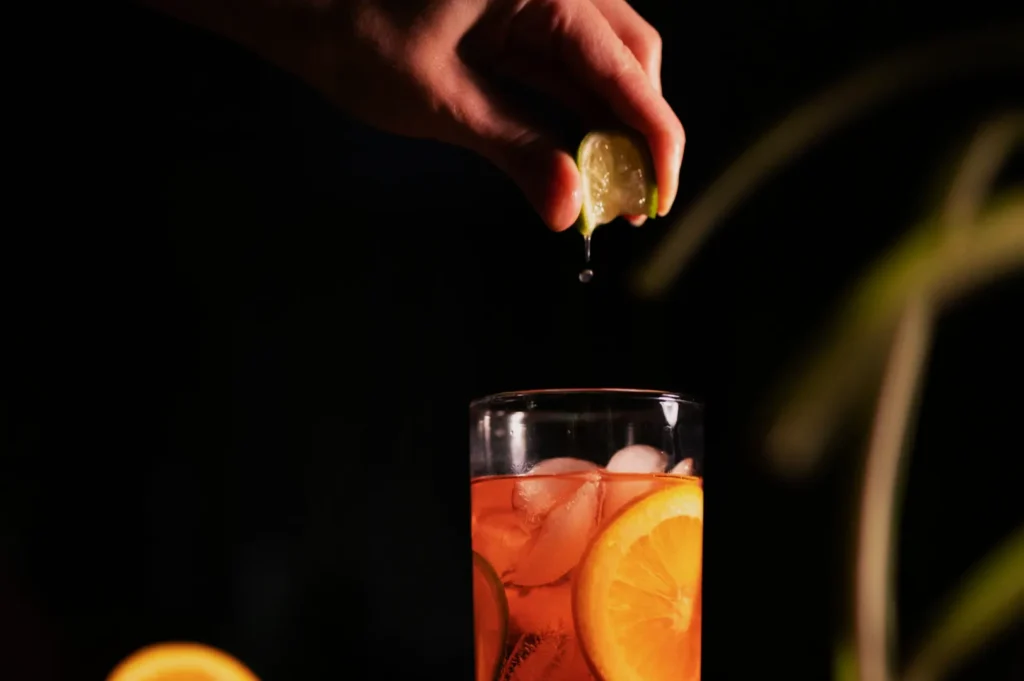
People introduce extra variables. Nails, sleeves, jewelry, skin shine, distractions. A few small decisions keep it professional without feeling overly controlled.
- Neutral sleeves win. Black, white, beige, muted tones. Avoid loud prints.
- Keep hands clean and realistic. No oily shine, no food smears unless it is intentional.
- Watch the plate edges. Hands tend to drag props out of alignment. Reset between takes.
- Use real service cues. Proper cutlery, correct hand position, culturally correct tools. Chopsticks for chopstick dishes. Spoon and fork where it makes sense.
If your team does not have time to manage these details mid-service, schedule human shots at the start of prep. This is where a professional workflow helps. At Food Photographer Studio, we usually build human shots into the timeline so the kitchen is not interrupted when it matters.
Where Human Photos Perform Best (And Where They Don’t)
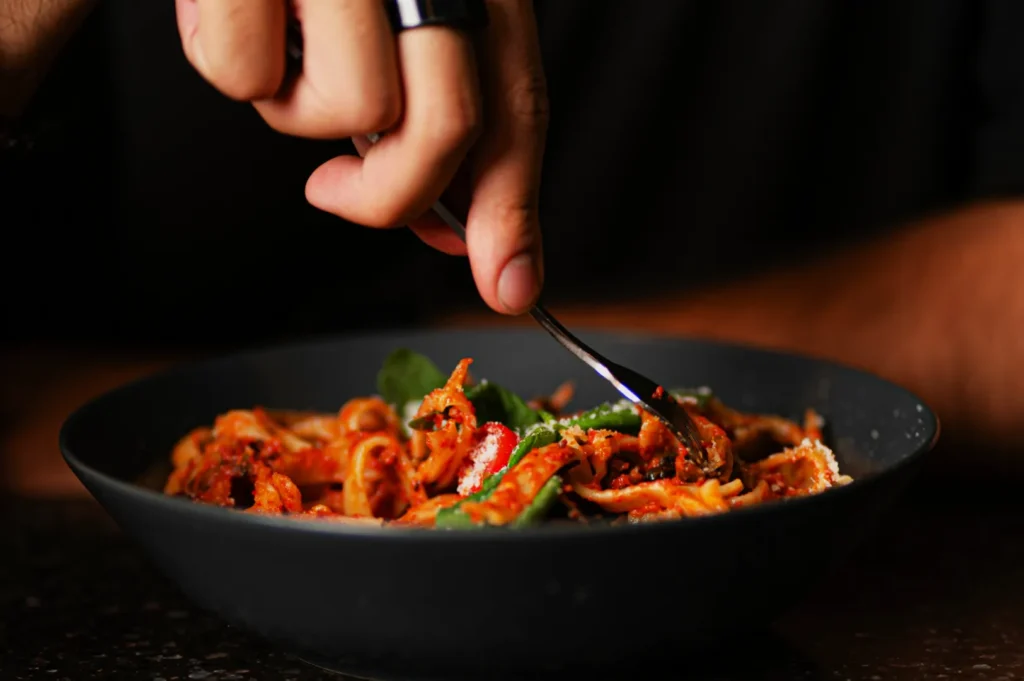
Human shots are powerful, but not everywhere.
Great for:
- Instagram posts, Reels covers, website hero banners
- Brand storytelling, chef-led concepts, behind-the-scenes content
- Ads that sell experience, not just items
Use carefully for:
- Delivery platform thumbnails (humans can confuse the product read)
- Menu grids where consistency and clarity matter most
- Small-screen listings where hands can block key ingredients
A good rule: if the image needs to answer “what exactly am I ordering,” keep it clean. If the image needs to answer “why does this place feel worth visiting,” bring in life.
A Simple Shot List That Adds Humans Without Overcomplicating Your Day
If you want results without turning this into a full production, try this:
- One clean hero shot (no humans)
- One hands-in action shot (pour, lift, cut, sprinkle)
- One scale shot (hand holding drink, fork lifting bite, plate being served)
- One environment hint (partial table, pass, countertop, no faces required)
That set gives you variety for social, website, and campaign use, without needing a full lifestyle shoot.
Conclusion: Make It Feel Real, Not Performed
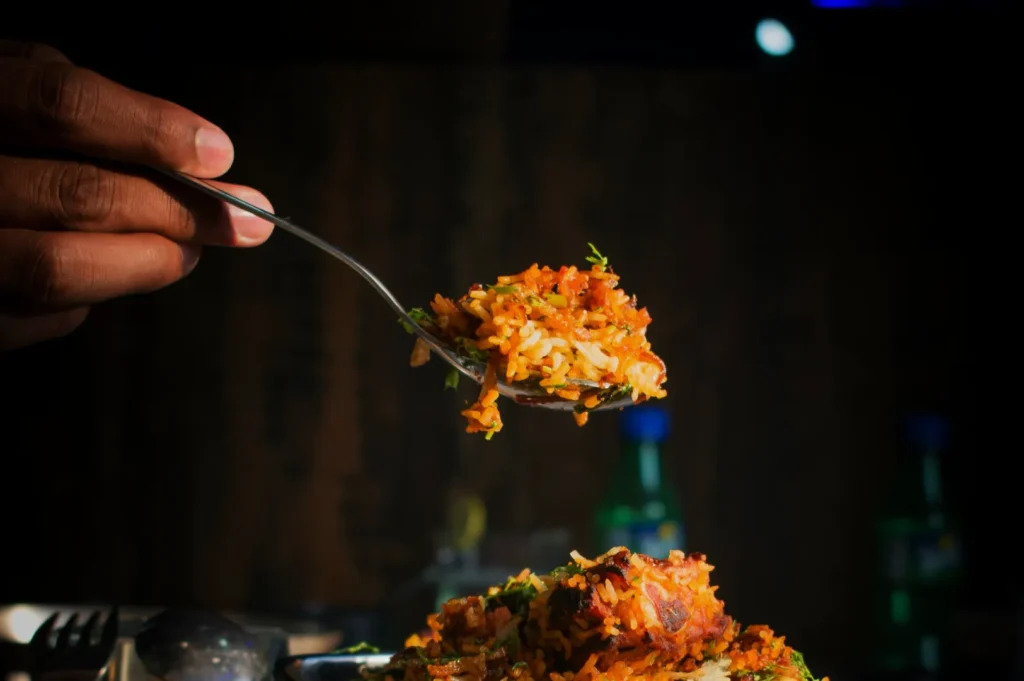
The best human food photos feel like a moment you walked into, not a scene you directed. Keep the action purposeful, keep the food as the hero, and let the human element do one job: make the dish feel alive.
If you want a cleaner path to that result, especially when you need consistency across a full menu or campaign, working with a team that shoots food in real Singapore service conditions saves time and prevents re-shoots. That is exactly what we do at Food Photographer Studio, with a workflow designed around kitchens that still need to run.