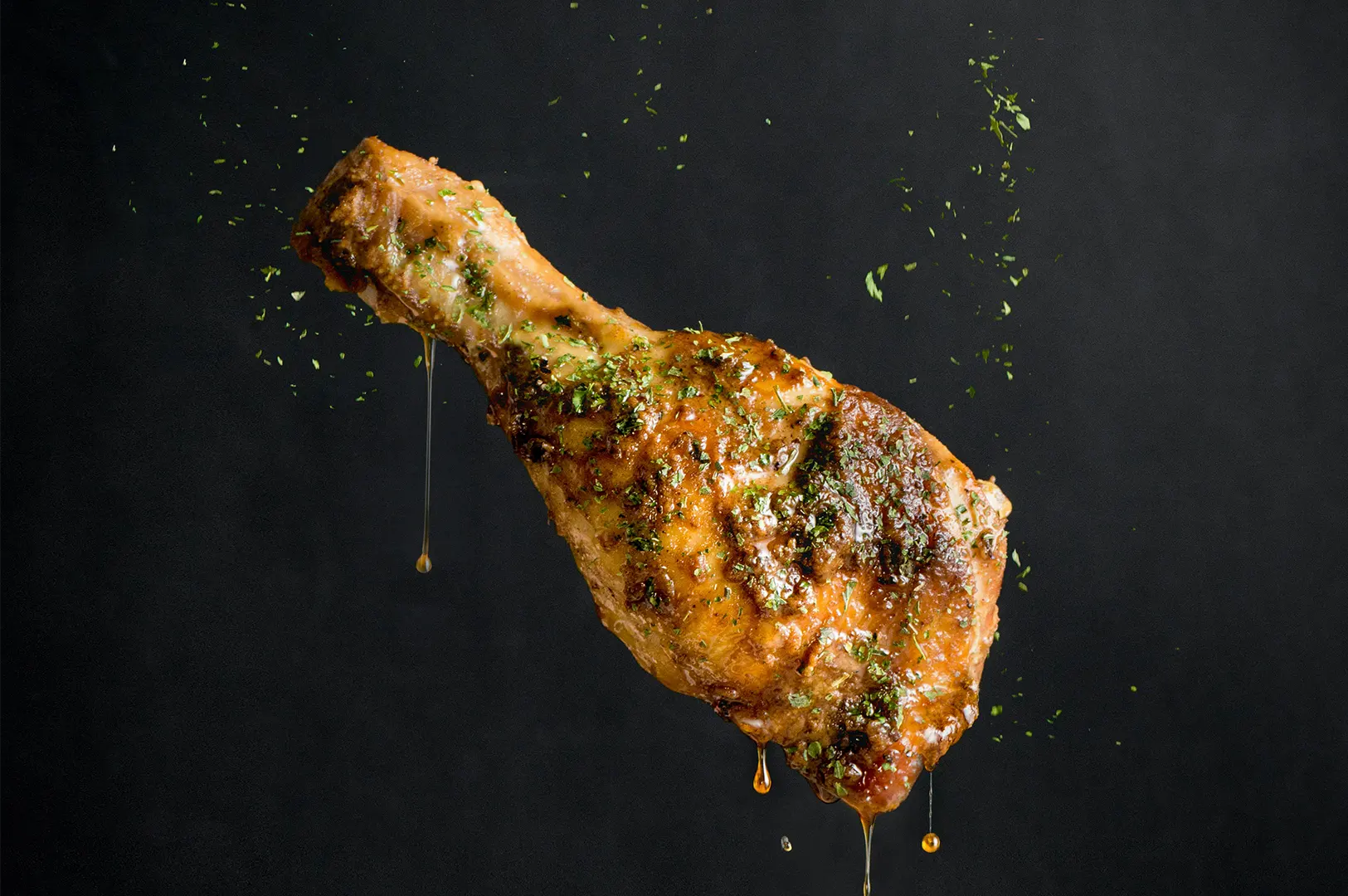
The request sounds simple.
“Can we use this photo to generate a wider background?”
Or:
“Can we make five festive versions from the same dish?”
Sometimes the restaurant wants to remove a hand, extend a table, create more empty space for copy, or turn one hero image into several campaign layouts.
We understand the appeal. A professional food shoot takes planning, kitchen time, styling, lighting, and editing. Once the restaurant has a strong image, it is tempting to treat it as the starting ingredient for everything else.
But AI use of food photography raises more questions than an ordinary crop or text overlay.
Before uploading a commissioned image into a generative tool, restaurant teams should check the photography licence, the tool’s terms, the people visible in the image, and whether the final result still represents the food honestly.
This article provides general information, not legal advice.
Uploading A Photo Is Still A Form Of Use
A restaurant may have permission to publish a photograph on its website, menu, social channels, or delivery platforms.
That does not necessarily mean it has permission to upload the file into an external AI system.
The tool may process the image to remove objects, generate new pixels, extend the frame, create variations, or analyse its visual content. Depending on the platform and settings, uploaded material may also be stored or used in other ways described in its terms.
The World Intellectual Property Organization’s guide to generative AI and intellectual property encourages organisations to consider ownership, confidential material, licences, outputs, and platform terms before adopting generative tools.
Permission to post a photograph is not automatically permission to feed it into every new tool.
Before uploading, check whether the original agreement permits:
- AI-assisted editing
- Uploading to third-party software
- Generating new image variations
- Replacing backgrounds
- Extending the original composition
- Creating synthetic ingredients or props
- Providing the file to an outside agency using AI
Our pillar guide to restaurant photography usage permissions explains how this fits beside ownership, licensing, third-party use, and modifications.
A Simple Background Extension Can Change The Image
We have seen otherwise sensible edits drift quickly.
A restaurant needs more space above a cocktail for a headline. The generative tool extends the background, but adds a second stem where none should exist. A table edge bends. The reflection on the glass no longer follows the light.
Food is especially unforgiving.
A tool may:
- Add repeated prawns to a plate
- Alter the shape of cutlery
- Change the number of dumplings
- Invent garnish
- Smooth away crisp texture
- Create impossible steam
- Replace a real ingredient with something visually similar
The result may look polished at first glance. A customer looking closely may notice that the dish does not make sense.
The more the tool changes the food itself, the further the image moves from photography into synthetic illustration.
That distinction should be clear inside the restaurant team. It may also affect how the image is labelled, approved, and used.
Do Not Upload People Without Thinking
A food photograph may also contain an identifiable chef, server, diner, or model.
Singapore’s PDPC published updated guidance in July 2026 on the use of personal data in generative AI. The guidance addresses how organisations collect and use personal data across generative AI systems, including data supplied by users. The official advisory guidelines are worth reviewing before uploading images containing recognisable people.
A staff member may have agreed to appear in a restaurant campaign. They may not have agreed for their face to be uploaded into a tool that can alter their expression, clothing, surroundings, or appearance.
Before using an image with people, ask:
- Does the original consent cover AI processing?
- Will the person’s appearance be altered?
- Could a digital replica or variation be created?
- Does the platform retain uploaded data?
- Will an outside agency have access?
- Can the image be deleted from the tool afterward?
The U.S. Copyright Office’s report on digital replicas examines the growing risks created when technology realistically reproduces a person’s appearance or voice. Singapore law may apply differently, but the issue is directly relevant to restaurant portraits and lifestyle imagery.
The Output May Not Have The Same Rights As The Original
Restaurants should not assume that every AI-generated output can be owned, protected, or used in the same way as the original photograph.
The U.S. Copyright Office’s ongoing copyright and artificial intelligence initiative has examined questions around AI-generated material, human authorship, digital replicas, and the use of copyrighted works in training.
The exact legal position depends on jurisdiction, the tool, the human contribution, and how the output was created.
For restaurant teams, the practical rule is simpler:
- Keep the original licensed photograph
- Record which tool created the variation
- Save the prompt and edit history
- Review the platform terms
- Do not assume exclusivity
- Do not sell or sublicense the output without checking
- Ask for advice when the image will support a major campaign
A quick social graphic carries different commercial risk from a permanent packaging design or national advertisement.
AI Should Not Fix A Weak Shoot Brief
Generative tools can help with small adaptations. They should not become an excuse to avoid planning the real photographs properly.
If the restaurant knows it needs vertical, square, and horizontal formats, capture those during the shoot. If text space is needed, compose for it. If several outlets require different backgrounds, discuss that before production.
We would rather move the camera and capture a clean second frame while the dish is fresh than ask software to invent half the table afterward.
There is also a trust issue.
If the real dish has six pieces but the AI version shows eight, the image may create a false portion expectation. If the tool adds richer sauce, taller steam, or a different garnish, the final result may advertise food the kitchen does not serve.
AI can extend the canvas, but it should not quietly rewrite the menu.
Create A Simple AI Image Policy
Restaurant groups do not need a complicated policy document. They do need shared rules.
A useful internal note might state:
- Only approved final files may be uploaded
- Images containing diners or staff require review
- Food ingredients and portion sizes must not be changed
- AI outputs must be checked against the real dish
- External agencies must disclose which tools they use
- Original files must remain untouched
- Major campaign edits require photographer approval
This helps when the social team, PR agency, designer, and operations team are all working from the same image library.
Ask Before The File Leaves Your Drive
Before putting a commissioned restaurant photograph into an AI tool, ask:
- Does the photography licence permit this?
- What will the tool do with the uploaded file?
- Are identifiable people visible?
- Will the food itself be altered?
- Does the output still match the served dish?
- Can the restaurant use the result commercially?
- Should the photographer or another rights holder approve it?
Generative tools can be useful. They can also make a clean, truthful photograph less reliable within a few clicks.
Use AI to adapt the image carefully, not to erase the decisions that made the original photograph worth commissioning.