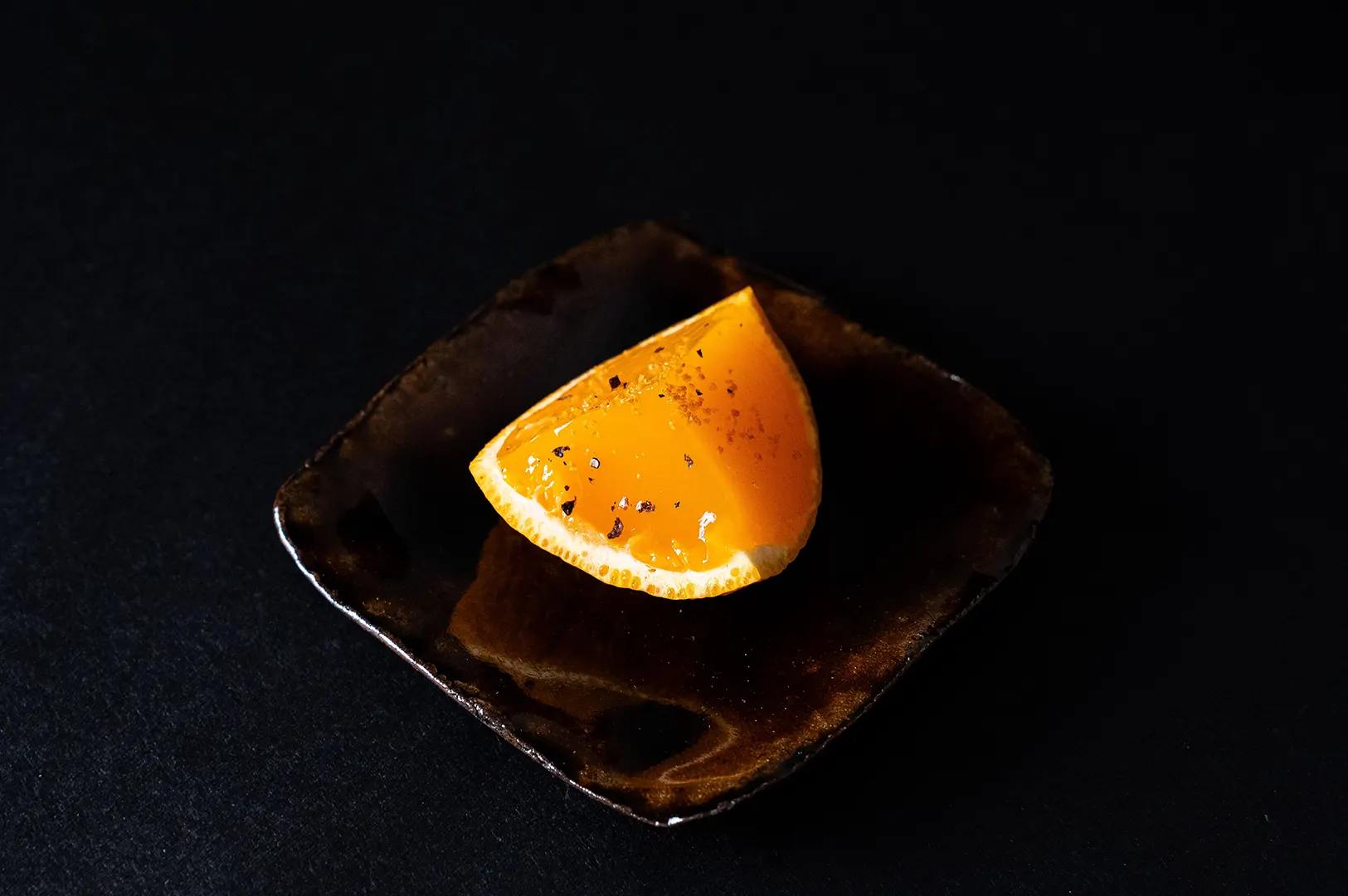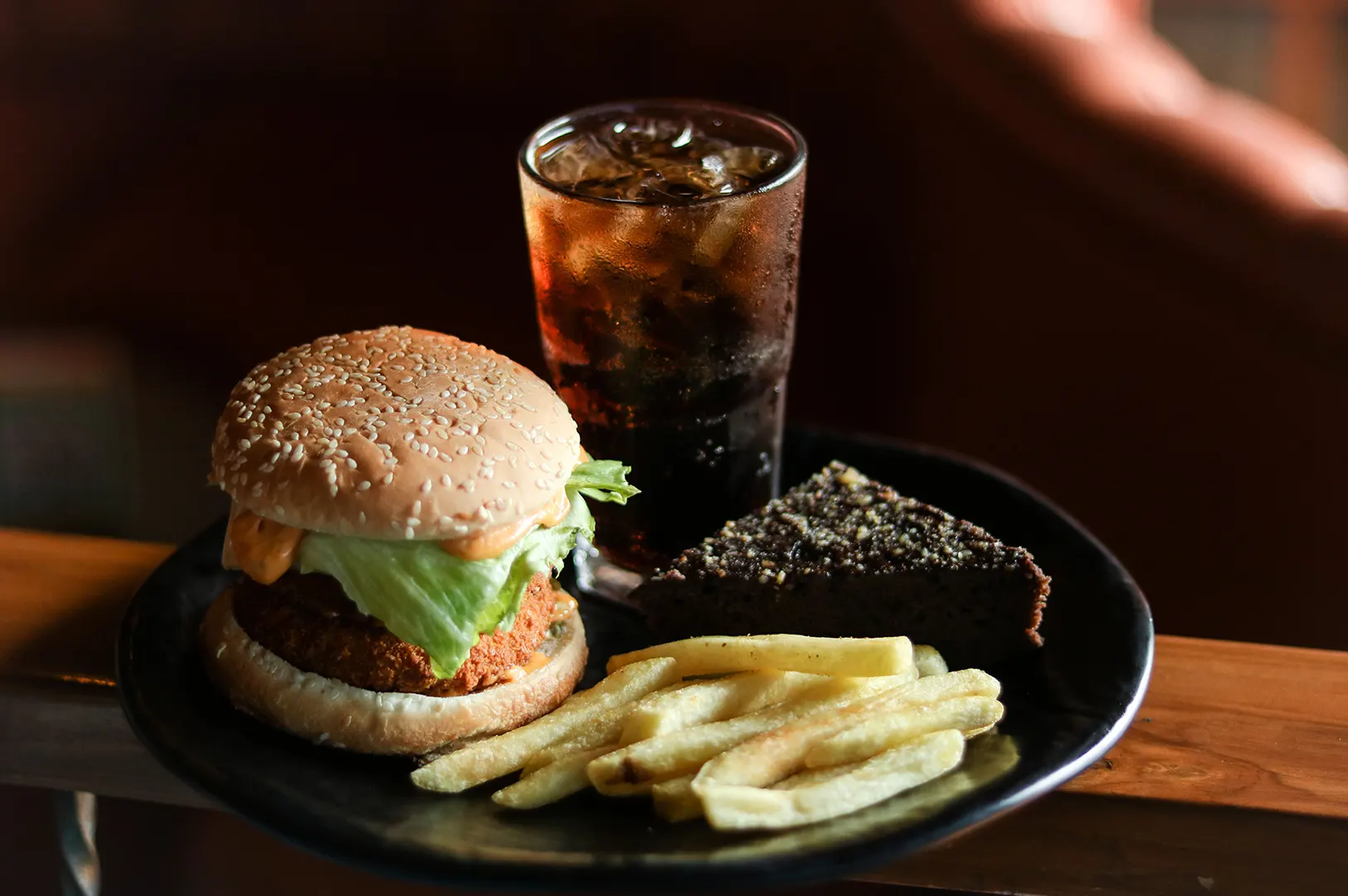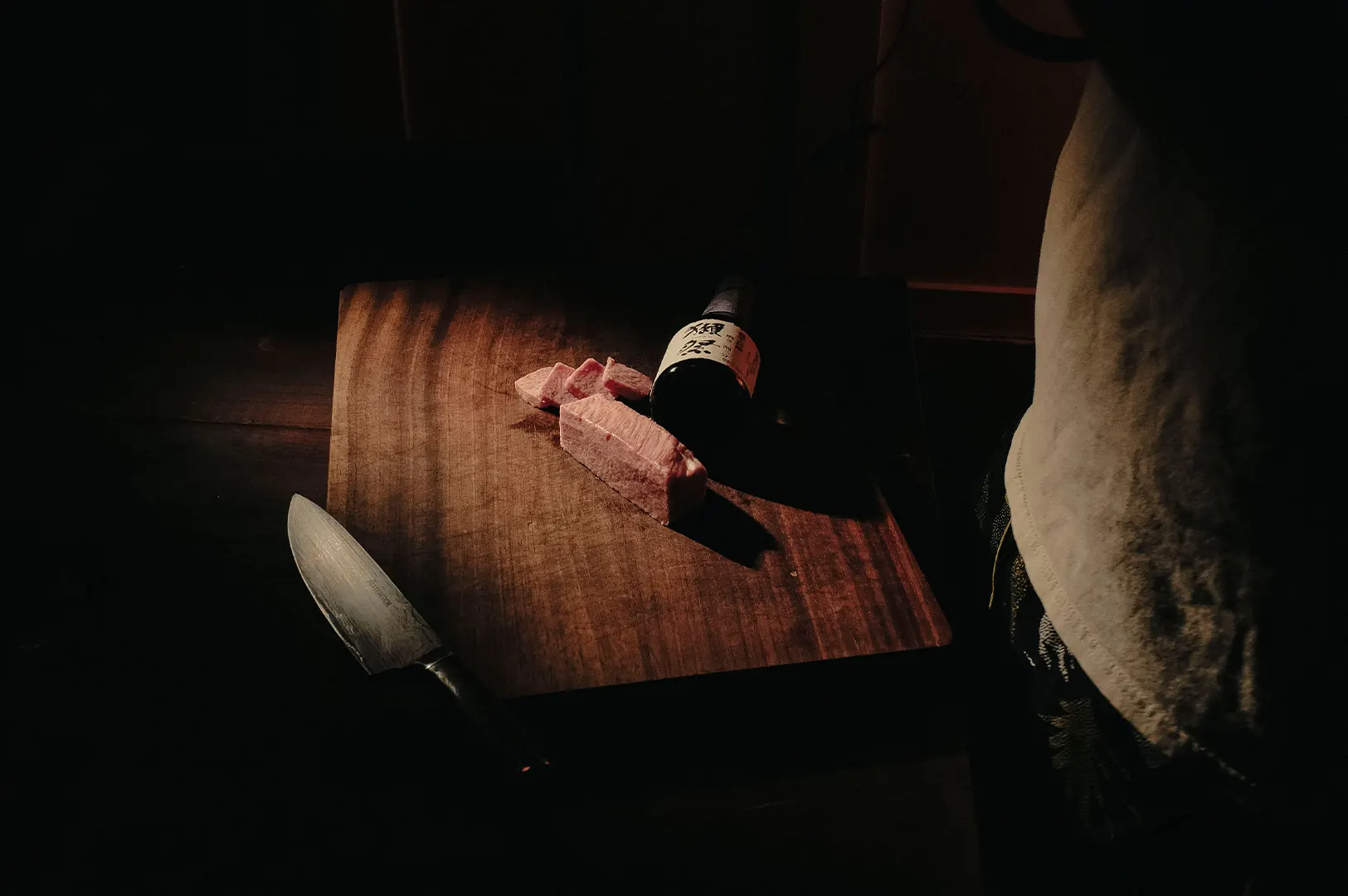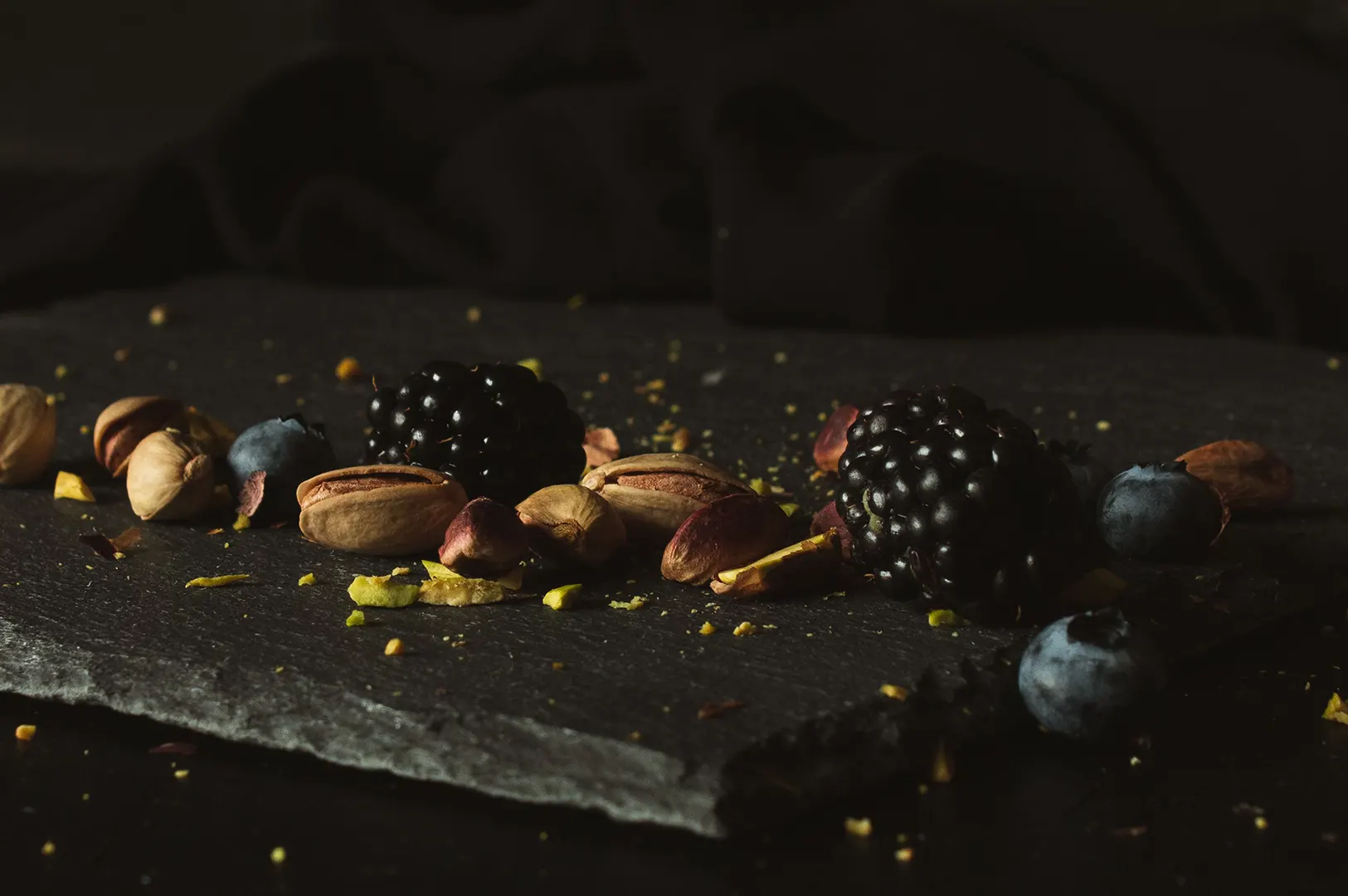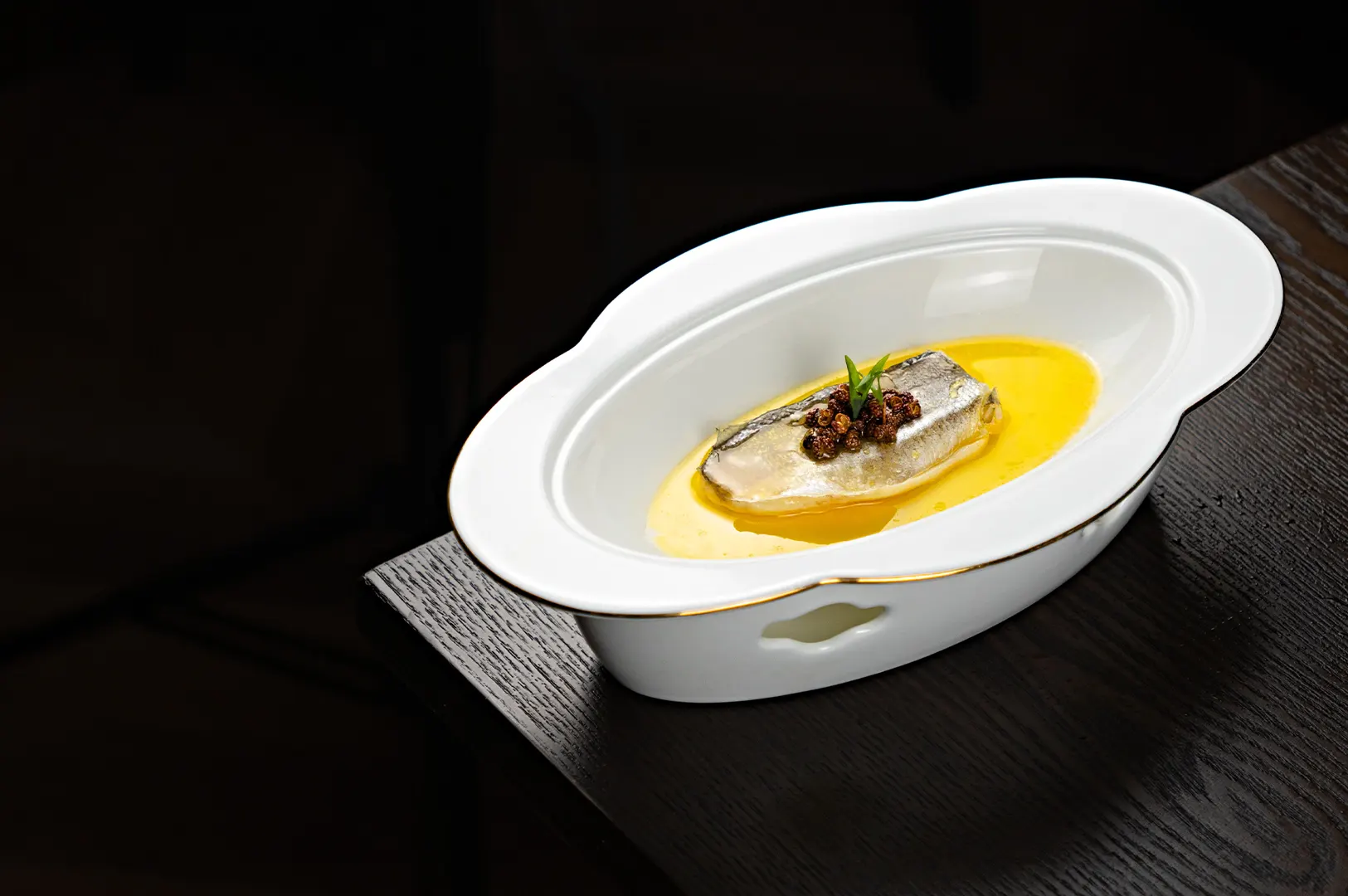
Some dishes arrive at the table looking delicate and full of detail, then almost disappear when we lift the camera.
White rice merges into a white plate. Silken tofu becomes one smooth block. Steamed fish loses the folds of the flesh beneath a pale sauce. Add a marble tabletop and bright overhead light, and half the plate can start looking like one uninterrupted patch of white.
We have had shoots where the food was perfectly cooked and the problem was entirely visual.
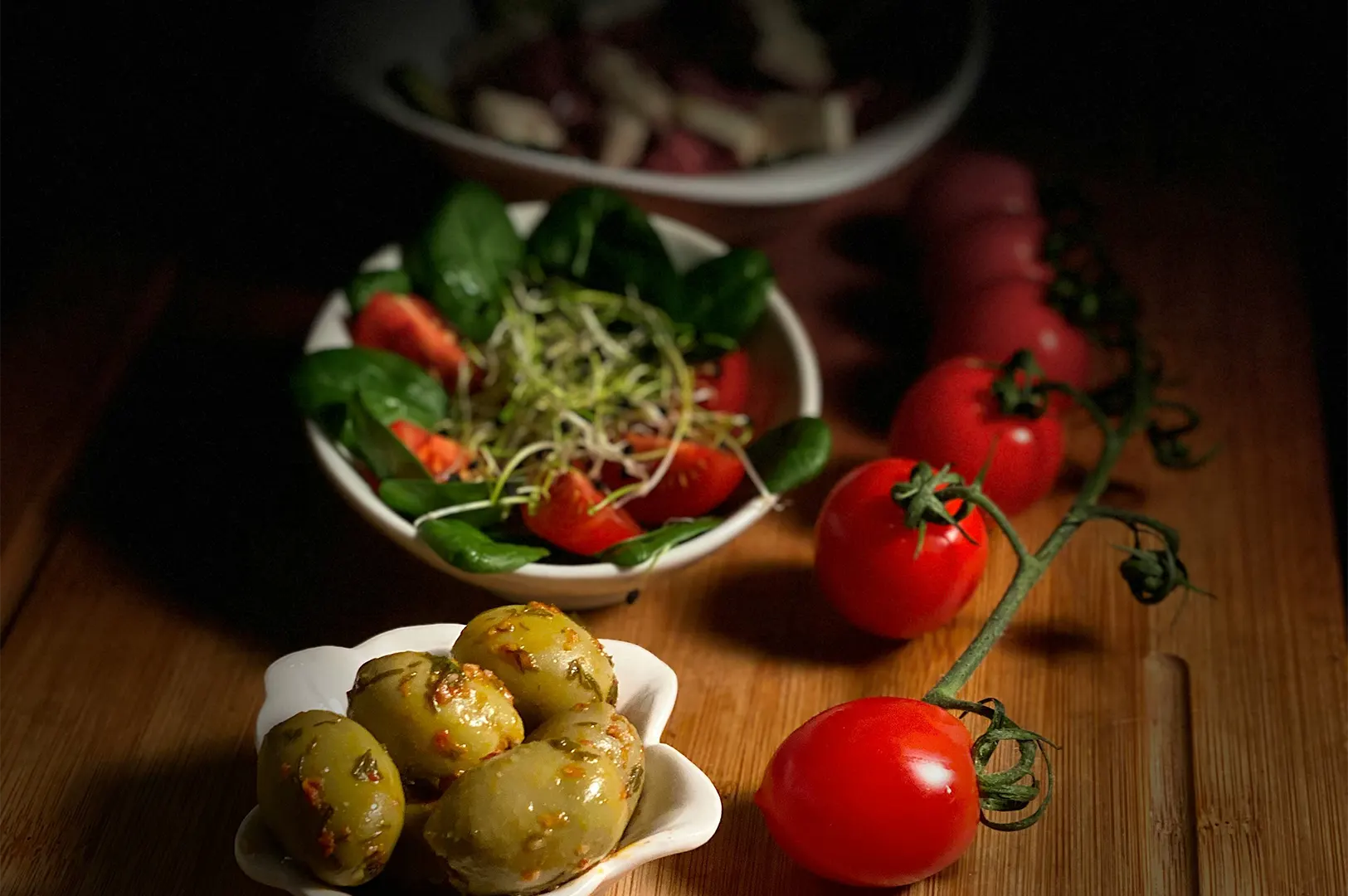
Pale food does not need more colour for the sake of colour. It needs enough difference in light, tone and texture for the camera to describe what is already there.
Do Not Brighten Everything
The instinct with white food is often to make the photograph brighter. That can make the problem worse.
If the rice, plate and background are all pushed towards the same bright value, the small shadows between grains disappear. Tofu loses its edges. Fish skin can become a featureless highlight.
We usually begin by protecting those pale areas and letting some gentle shadow remain.
Sony’s guide to photographing food notes that front light can make food look flat because it creates little shadow, while changing the angle of the light gives the subject more depth. That is particularly useful when colour contrast is limited.
A white dish should still contain whites, off-whites, highlights and shadows. That variation is what gives it shape.
Let Side Light Do the Heavy Lifting
Rice is a good example.
From directly above under broad flat light, a mound of rice can look like a white oval. Move the light to one side and suddenly each uneven grain produces a tiny highlight and shadow.
The same approach helps with steamed fish. We want to see where the flesh separates, where the skin catches light and where the sauce settles.
On one shoot, a steamed fish looked almost overexposed even though the camera settings were fine. We moved the light farther to the side and rotated the plate slightly. Nothing was added. The folds in the fish simply became visible again.
Fujifilm photographer Vueey Le describes noticing how light moves across a plate before thinking about composition, and notes that light and colour carry much of the story in food photography. We approach pale dishes similarly: look at what the light reveals before reaching for extra garnish. Read Fujifilm’s feature on light and colour in food photography.
Use the Plate as Part of the Contrast
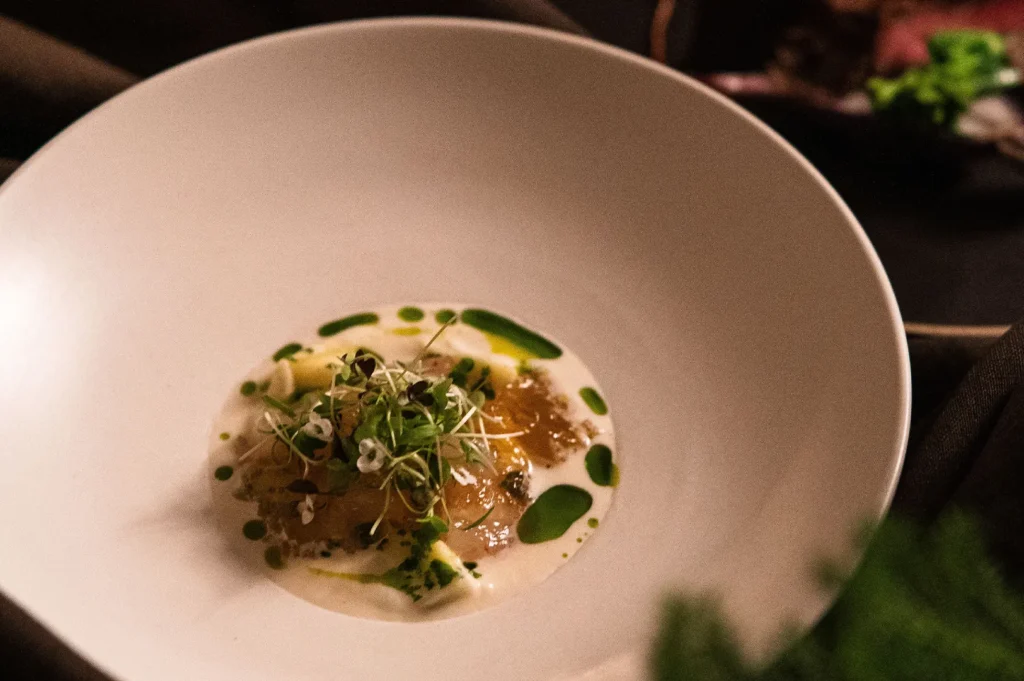
White food does not have to leave the white plate.
Sometimes that pale-on-pale look is exactly right for the restaurant. Then separation has to come from shadows, sauce, plate shape and the surface underneath.
But if the dish repeatedly disappears, crockery is one of the easiest variables to change.
A muted grey, celadon or darker ceramic can give steamed tofu or rice enough boundary without changing the character of the food. The plate does not need to become the loudest object in the frame.
We have also removed white napkins and pale props because they created one large bright area around the dish. What looked elegant on the table became visually empty through the camera.
Contrast can be quiet.
Be Careful With Garnish
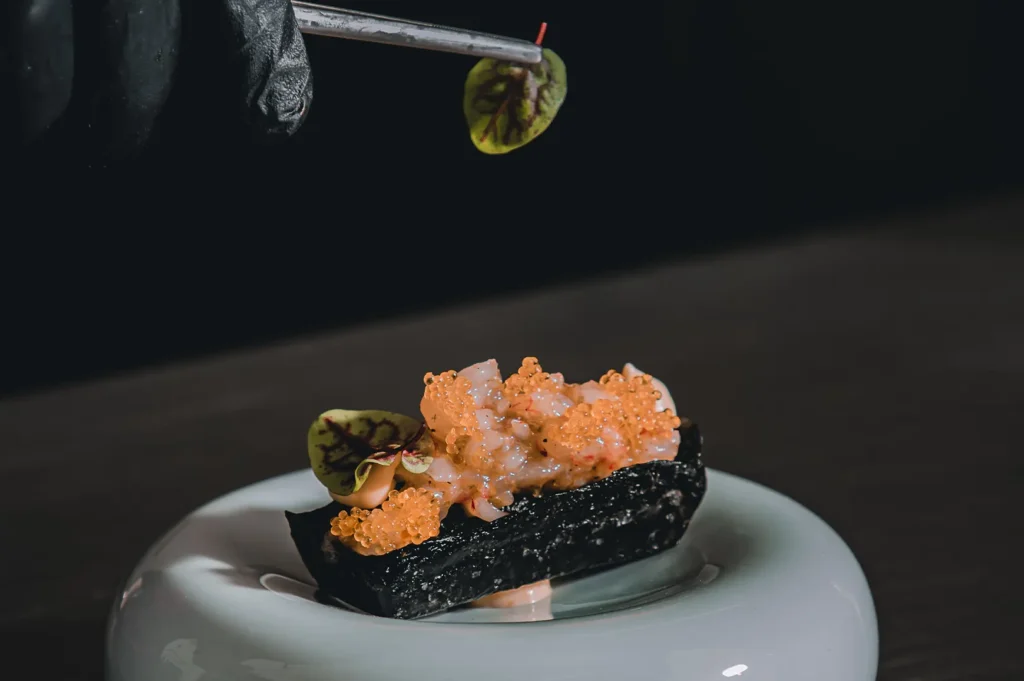
A handful of spring onion can solve a colour problem quickly. It can also turn every pale dish into the same photograph.
We prefer garnish that belongs there.
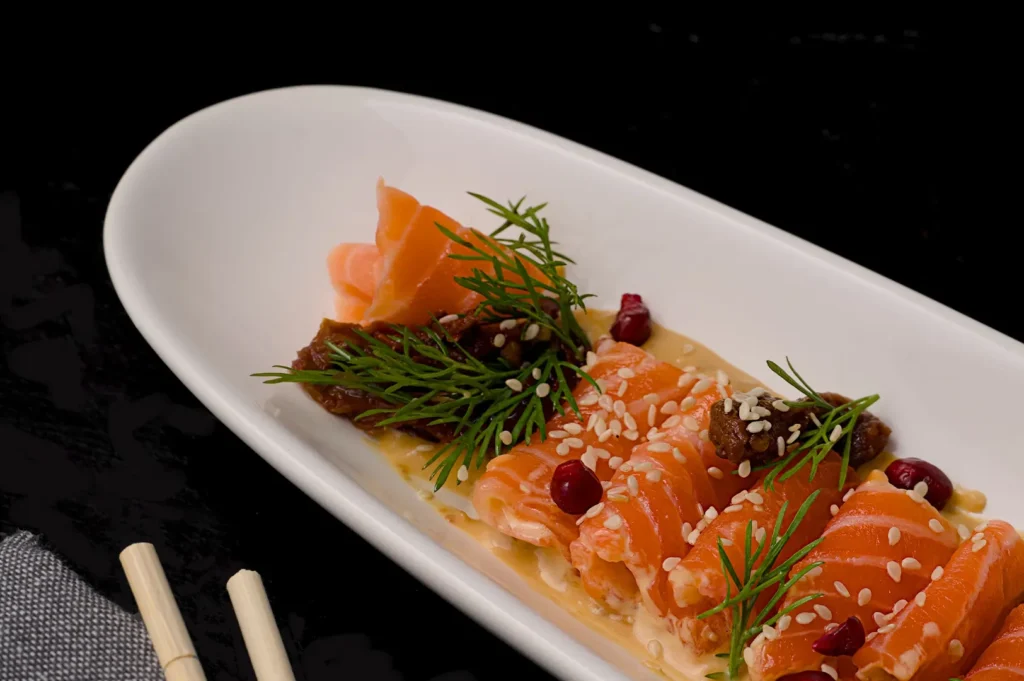
Ginger, scallion, chilli, soy or fried shallots can help define a dish when they are actually part of how it is served. They should not be scattered across tofu simply because the photographer wants green in the frame.
For white rice, the accompanying dish may provide all the contrast needed. For steamed fish, the sauce, aromatics and skin can do the work if the light is right.
A restaurant photography specialist in Singapore should be able to make pale food readable without redesigning the chef’s plating for the camera.
Watch the Highlights Until the Final Frame
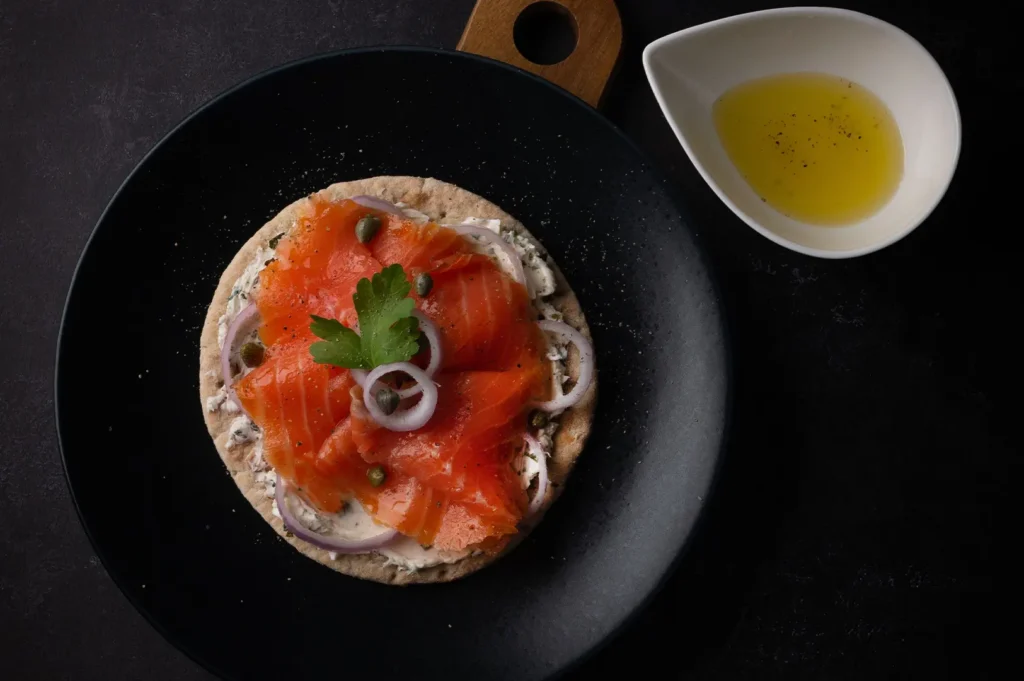
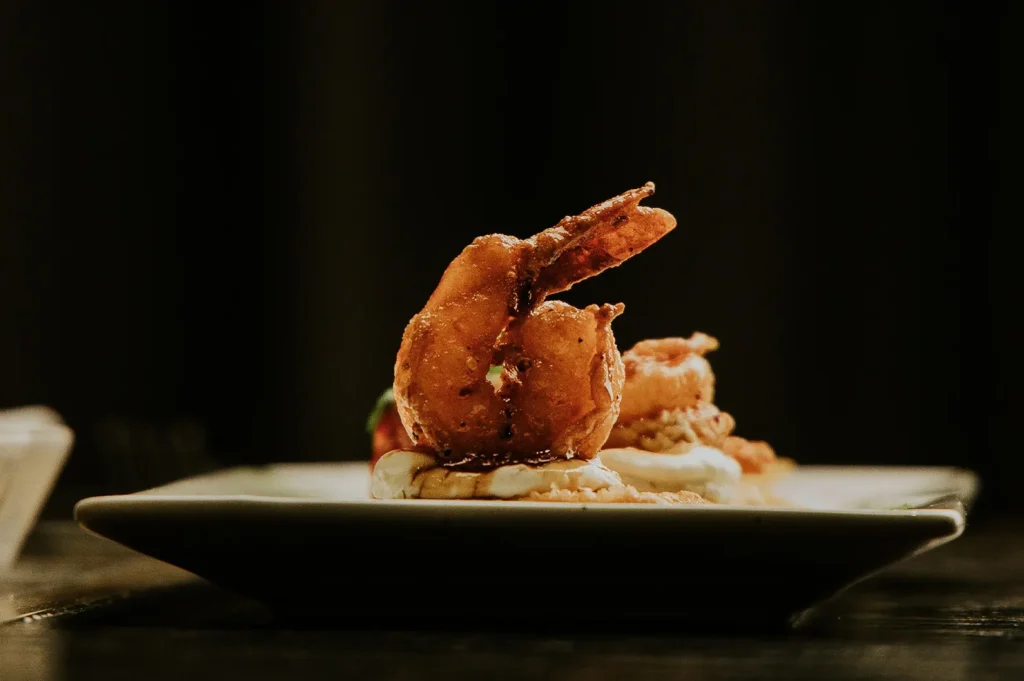
Pale food is unforgiving when sauces and oils start reflecting the light.
A small highlight can make tofu look silky. A large blown reflection makes the surface look blank. Steamed fish may need its natural moisture, but we still adjust the plate or light when one shiny patch starts hiding the texture underneath.
We check the photograph at the size where customers will actually see it, not only enlarged on a monitor.
If the grains still separate, the tofu has an edge and the fish looks tender rather than washed out, the photograph is doing its job.
Pale food does not have to shout to stay visible.
It just needs enough shadow, texture and tonal separation for the camera to see what the diner sees.