“Ambience shots” are tricky in Singapore because diners are sharp. They can tell when a photo looks like a showroom version of your restaurant instead of the place they will actually walk into. And when the photos oversell the vibe, the disappointment lands hard, even if the food is solid.
So let’s be clear about the goal: restaurant interior aesthetic photography should make your space feel desirable, but still true. You are not documenting every chair perfectly. You are also not inventing a mood your guests will never experience.
If you want a consistent visual direction across food, interiors, and brand content, this ties directly into our aesthetic photography style system for Singapore F&B.
What “Without Lying” Actually Means
It is not about being boring. It is about being accurate with the things that matter.
You are “lying” when you:
- Shoot only the best corner and imply the whole restaurant looks like that.
- Brighten a dim bar into a daylight cafe in editing.
- Remove every table setting, queue, or staff movement so the space feels bigger than real life.
- Style with props that do not exist in your actual service, then use those photos on booking pages.
You are being honest when you:
- Photograph the best version of your real space, using your real lighting logic.
- Show the atmosphere you are known for, not a fantasy one.
- Keep the “feel” consistent across your website, Google profile, menus, and social posts.
In practical terms, honest photos reduce friction. Diners arrive with the right expectations. They settle faster. They trust you more.
The Three Ambience Shots That Do Most of the Work
Most restaurants do not need twenty wide interior photos. They need a small set of images that cover how the place feels.
1) The Arrival Shot
This is the “first three seconds” moment. It can be your entrance, signage, host stand, or corridor view. It tells diners: modern, cosy, loud, quiet, date-night, family-friendly.
2) The Seating Mood Shot
Not a full-floor plan photo. A “how it feels to sit here” frame. Think booth lighting, table spacing, the texture of the room, how the light falls on surfaces. If your restaurant lives on warm shadows, let it live there.
3) The Detail Shot That Signals Identity
A bar shelf, a custom tile wall, an open kitchen pass, a chef’s counter, your signature chair, your menu on the table. Details are where “aesthetic” becomes believable.
If you capture these three well, everything else becomes supporting content.
Lighting: Keep the Mood, Don’t Rewrite It
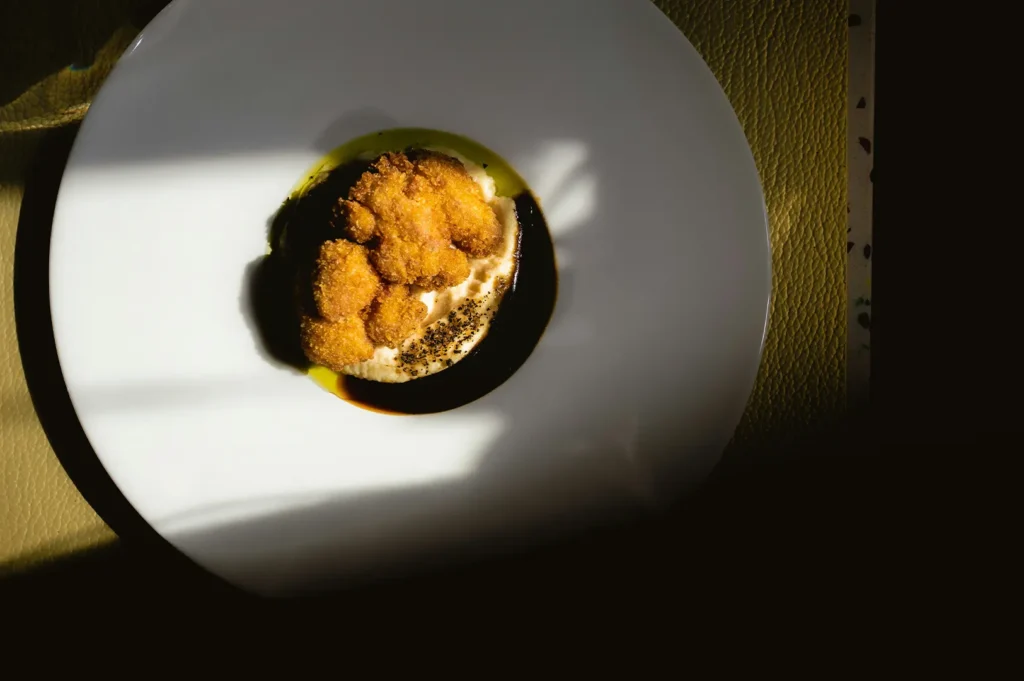
Singapore interiors often mix warm downlights, window light, and random cool spill from the kitchen. If you “correct” everything to neutral daylight, you can accidentally erase your brand.
A better approach:
- Decide what the space is meant to feel like. Warm and intimate? Bright and clean? Industrial and moody?
- Balance, don’t bleach. Control the ugly casts, but keep the atmosphere.
- Avoid fake brightness. If the space is meant to be dim, keep it dim. Just make it readable.
A simple rule: if your guests experience warm light, your photos should still feel warm.
Styling the Space the Honest Way
Interior styling for a shoot is not the same as staging a condo listing. Your photos should reflect actual service.
What we usually do (and what you can do too):
- Reset tables the way you truly set them for guests.
- Remove clutter that is not part of the guest experience (delivery bags, random cartons, stray cables).
- Keep “life cues” that are real: menus on tables, water glasses, a napkin, a well-placed condiment set.
What to avoid:
- Borrowed props that do not belong to your concept.
- Over-styling every surface until it looks unused.
- Rearranging the layout into something your staff cannot maintain.
A diner can forgive a lived-in space. They do not forgive a photo that promised a different restaurant.
How to Include People Without Overpromising
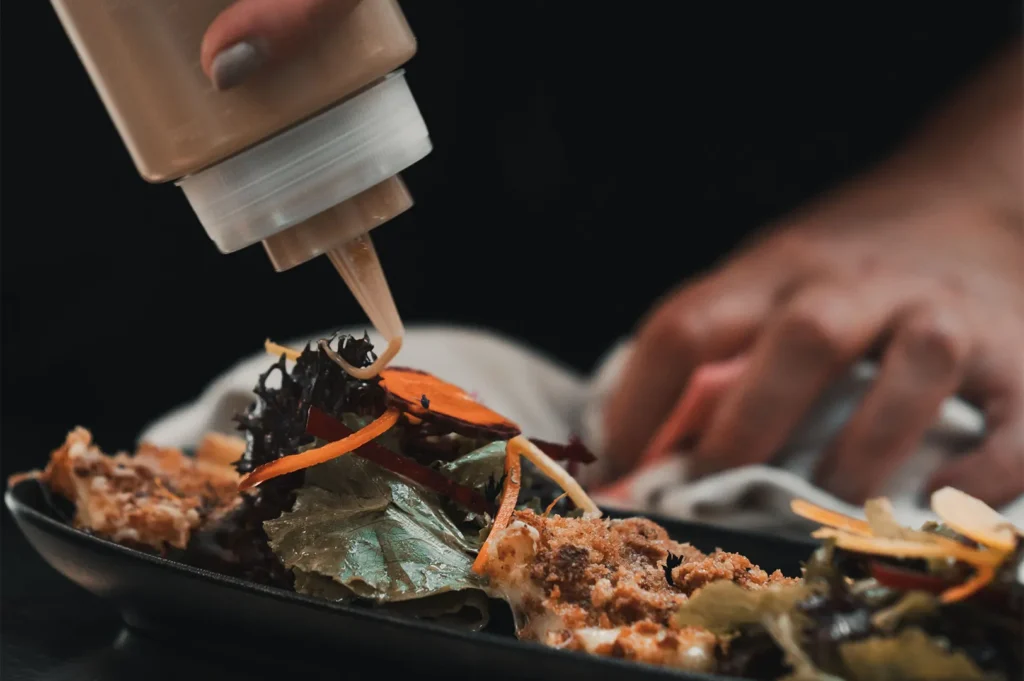
People make ambience believable, but only if you use them correctly.
The safest options:
- A staff member polishing a glass at the bar.
- A chef plating at the pass.
- A server placing a dish down.
- Diners blurred in the background so the space feels active, not staged.
What creates distrust:
- A packed restaurant shot if you are usually quiet.
- A silent, empty-room shot if you are always bustling.
- Models dressed for a different kind of venue than yours.
Use people to communicate rhythm: calm lunch, busy dinner, late-night bar energy. Not to manufacture popularity.
Angles That Make the Space Look Good Without Distorting It
Wide lenses can make small spaces look huge. That is exactly why they are dangerous for “without lying” interior work.
A more honest approach:
- Use a wider angle only when needed, and keep lines straight.
- Shoot from human height, not ceiling height.
- Show depth with layers: foreground table edge, mid-ground seating, background glow.
If your first instinct is to push the camera into a corner to “fit everything”, pause. A tight, well-composed shot that feels real often sells better than a wide shot that feels suspicious.
Editing: The Line Between Clean and Fake
Editing is where interior photos quietly cross into “too much”.
Keep it clean:
- Straighten verticals.
- Correct extreme colour casts.
- Lift shadows slightly if you are losing detail.
Avoid turning it into fiction:
- Do not change the lighting mood completely.
- Do not erase all imperfections if those imperfections are part of the venue’s character.
- Do not make dark wood look like pale oak just because it “trends”.
The best interior aesthetic photography looks polished, but still lived-in.
A Simple Shoot Plan That Works in Real Singapore Operations
If you are photographing during service, you need speed and control.
A practical flow:
- Shoot the room before doors open, while tables are clean.
- Shoot one seating zone with small resets, not the entire floor at once.
- Capture kitchen or bar action during prep, not peak chaos.
- Take one “night mood” set after sunset if your venue is dinner-led.
If you are doing it with a professional team, this is where planning pays off. At Food Photographer Studio, we build these shoot plans around your service rhythm so you get atmosphere without disruption.
The Point of Ambience Photography
A strong interior photo does not scream. It invites.
It tells the diner: “This is the kind of place you’ll feel good sitting in.” And when they arrive, it should match what they saw. That is how aesthetic photography becomes a business asset instead of a marketing risk.
If you want interior visuals that feel premium but stay truthful to your space, Food Photographer Studio can help you shape a consistent look across ambience, food, and brand content, without turning your restaurant into a fantasy set.