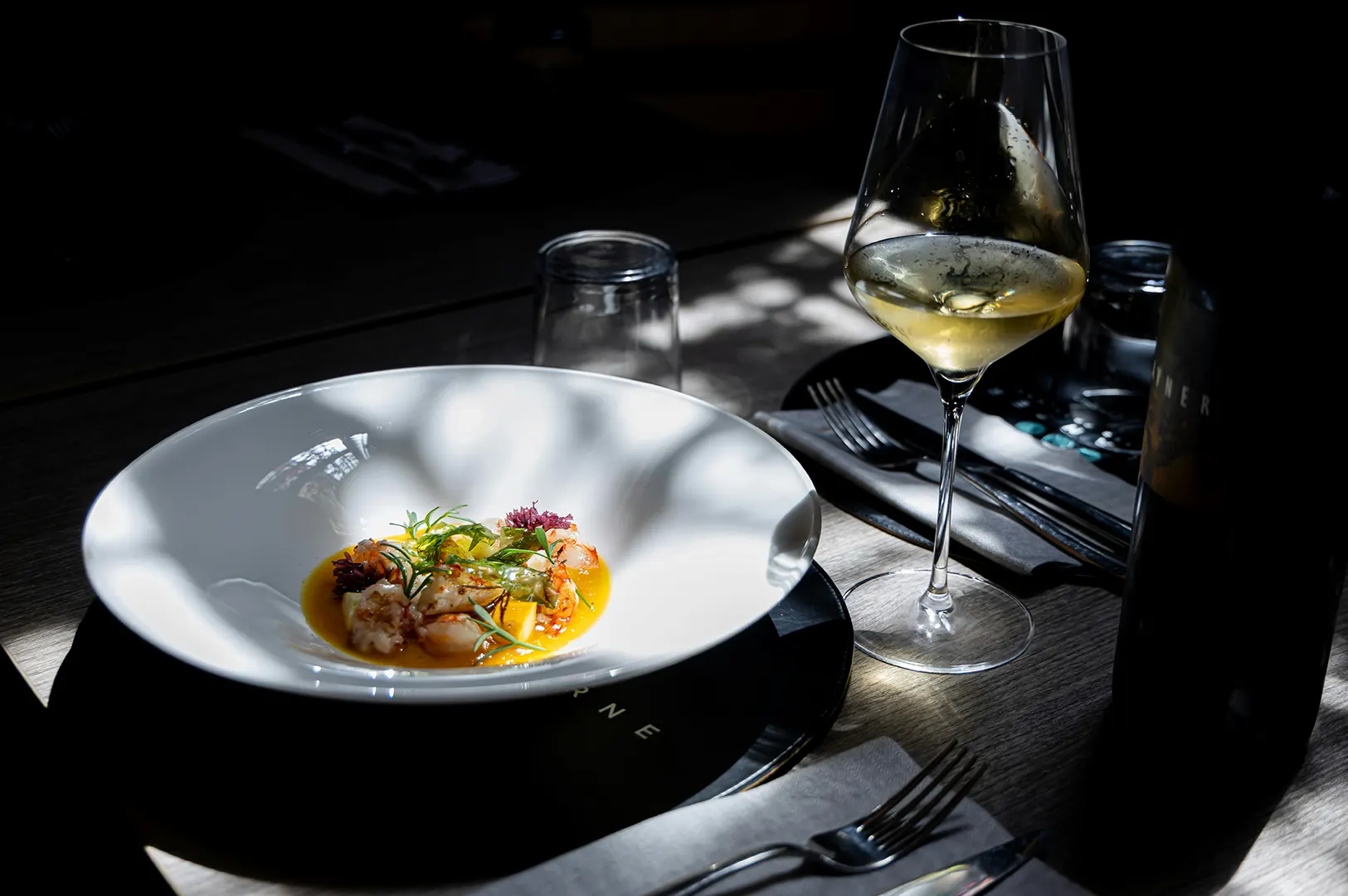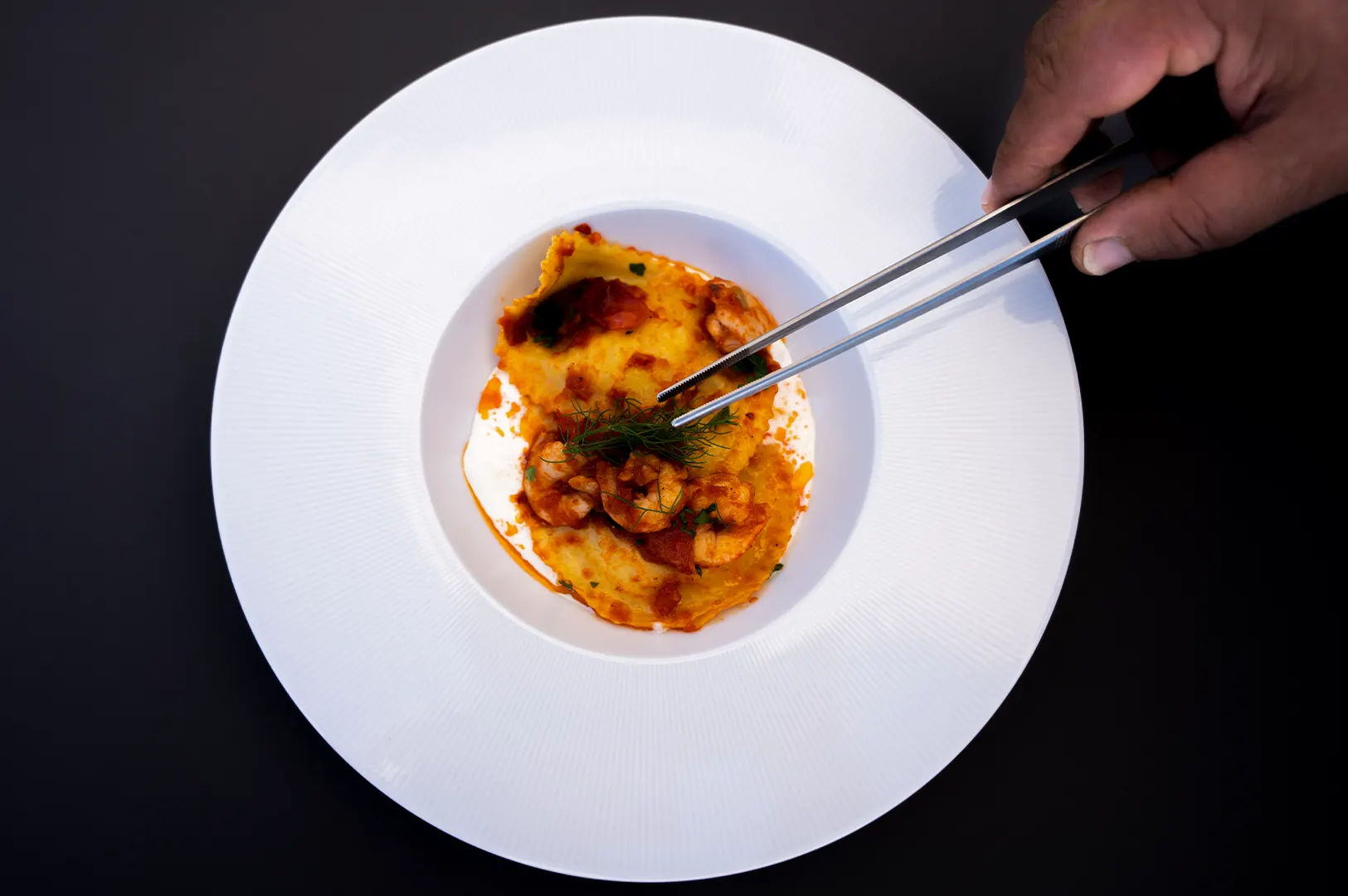
A plate can become too neat.
We notice it most when photographing food people already know by sight. Chicken rice arrives with the slices aligned perfectly. Nasi lemak gets transferred from its familiar paper or banana-leaf setting onto a spotless designer plate. Curry is wiped so carefully from the rim that the dish begins to look less generous than it does at the table.
Nothing is technically wrong. The lighting is controlled. The garnish is tidy. The plate is clean.
But somewhere between the kitchen and the final frame, the food has stopped feeling familiar.
Heritage food does not need to look careless. It does need to retain the visual clues that tell people what it is, where it belongs and how it is normally enjoyed.
Polish the Distractions, Not the Identity
Food styling often begins with sensible corrections. We turn the best side of a piece of chicken towards camera. We remove a wilted garnish. We wipe an accidental drip. We redistribute ingredients so the customer can see what is actually in the dish.
The problem starts when every irregularity is treated as a flaw.
A slightly uneven stack of roti prata can suggest the layers and handling that make it recognisable. Satay crowded together on a plate can communicate abundance better than six skewers spaced with ruler-like precision. A spoonful of sambal does not always need to become a perfect quenelle.
The question we ask is not, “Can we make this neater?” It is, “Will making this neater remove something customers recognise?”
That distinction matters especially in Singapore, where food traditions have developed through different communities, kitchens and everyday eating spaces. UNESCO’s documentation of Singapore’s hawker culture describes it as having evolved from street food culture, with dishes shaped by the country’s multicultural context and adapted to local tastes.
Keep the Objects That Carry Context
Sometimes the most important styling decision is what we do not remove.
Banana leaf, waxed paper, metal trays, melamine bowls, chopsticks, condiment dishes and even the table surface can help explain a dish. Singapore’s National Heritage Board also documents the material side of hawker culture, including the tools, utensils and environments connected to preparing and eating the food. Read the National Heritage Board’s account of Singapore’s hawker material heritage
We have seen a familiar dish lose its character simply because every everyday object around it was replaced with something “premium”.
That does not mean heritage food must always be photographed on old crockery or in a hawker centre. A restaurant may genuinely serve traditional dishes in a contemporary room. The photograph should represent that restaurant.
But styling should not automatically translate “premium” into dark marble, brass cutlery and oversized ceramic plates.
Authenticity is not an aesthetic preset.
Let the Food Keep Some Movement
Many heritage dishes are built to be mixed, shared, torn, dipped or spooned.
A pristine bowl can sometimes hide that.
For a curry, we may let one piece of meat break the surface rather than burying everything beneath an uninterrupted pool of gravy. For rojak, the irregular mixture is part of the visual story; separating every ingredient into a neat composition can make it look like another dish entirely.
During a shoot, we often take the clean hero frame first. Then we loosen it slightly: turn one piece, disturb the sauce, open a fold, let some ingredients overlap.
Very often, that second version feels more edible.
This is where a commercial food photography team should work with the chef rather than styling from visual instinct alone. The chef knows which details are deliberate, which are flexible and which would make a regular customer immediately say, “That is not how we serve it.”
Do Not Turn Heritage Into a Costume
There is another extreme to avoid.
Trying to make heritage food look “authentic” can become theatrical: old newspapers, vintage props, rustic wooden boards and nostalgic objects appearing simply because the dish is traditional.
The result may say more about the styling concept than the food.
Singapore’s heritage food is not frozen in the past. The National Heritage Board describes hawker culture as something that has continued to evolve alongside technology and changing consumer tastes.
Photography can reflect that living quality.
A family recipe can sit comfortably in a modern restaurant. Traditional kueh can be photographed with clean contemporary light. A decades-old dish does not need sepia tones to prove that it has history.
Good heritage-food photography respects memory without manufacturing nostalgia.
The aim is not to make the plate look untouched. It is to know which details are worth touching.
Clean the distraction. Improve the light. Turn the strongest piece towards the camera. Give the food enough structure to photograph well.
Then stop before the styling removes the reason people recognise the dish in the first place.