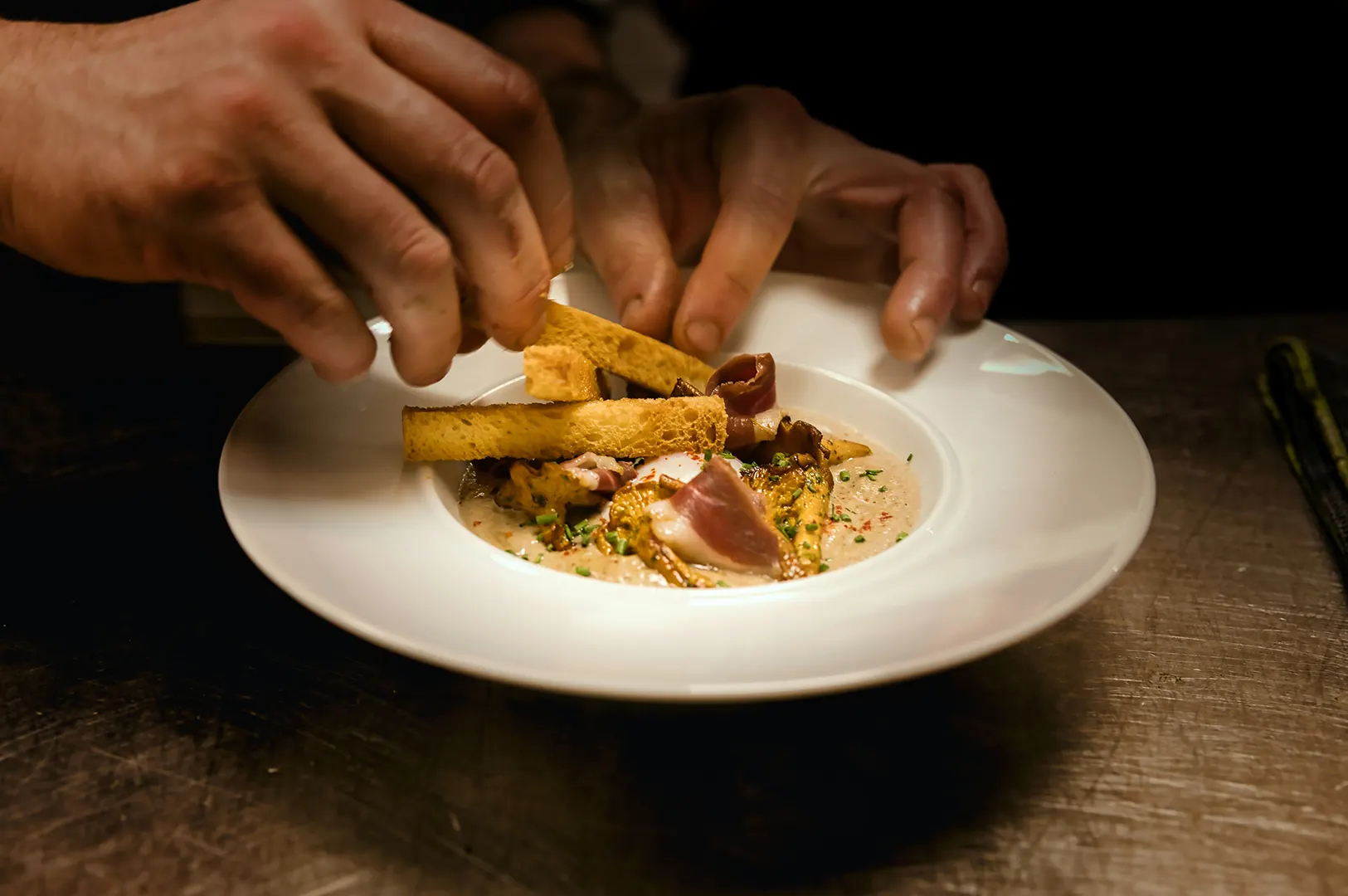
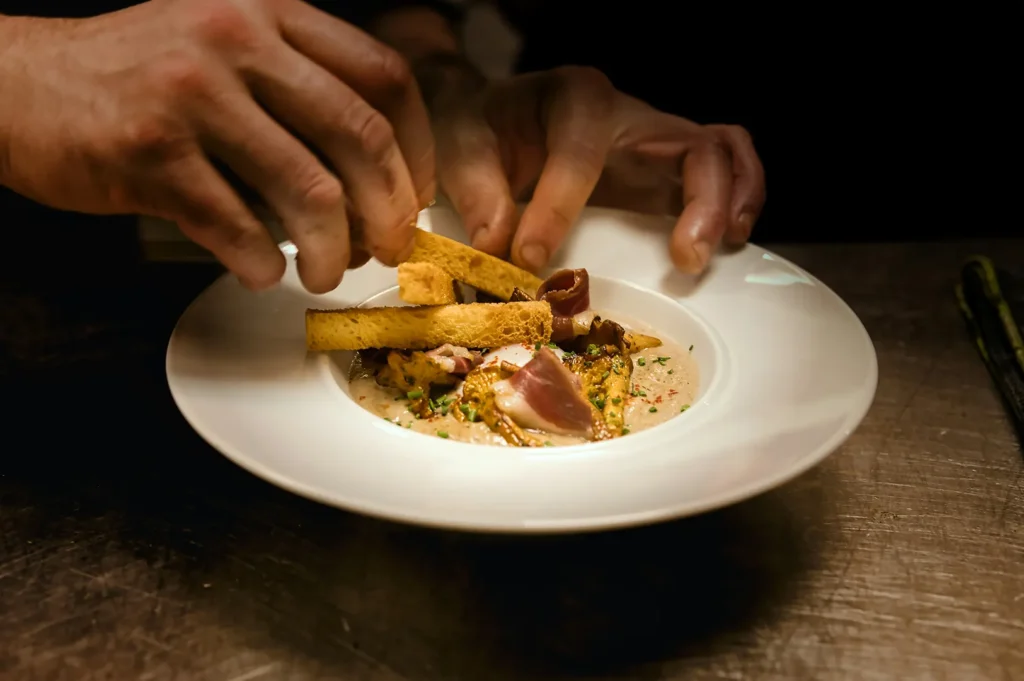
We have worked on shoots where the chef plates every dish and nobody touches it afterwards.
We have also worked on shoots where the first plate arrives, everyone looks at the camera screen and we move three ingredients before taking the final frame.
Both can be right.
Food styling is not automatically about replacing the chef's plating. Sometimes it is simply about helping that plating survive the camera.
Start With the Chef's Intended Dish
For restaurant work, we always want to understand the real serving first.
How does the kitchen plate it during service?
What is deliberate?
Which garnish matters?
Where does the sauce normally sit?
Fstoppers' restaurant photoshoot planning guide specifically recommends deciding in advance whether the restaurant will plate the food as it should be photographed or whether a food stylist is required. Fstoppers on preparing for restaurant photography
That question should not be answered automatically.
Some Dishes Need Very Little Help
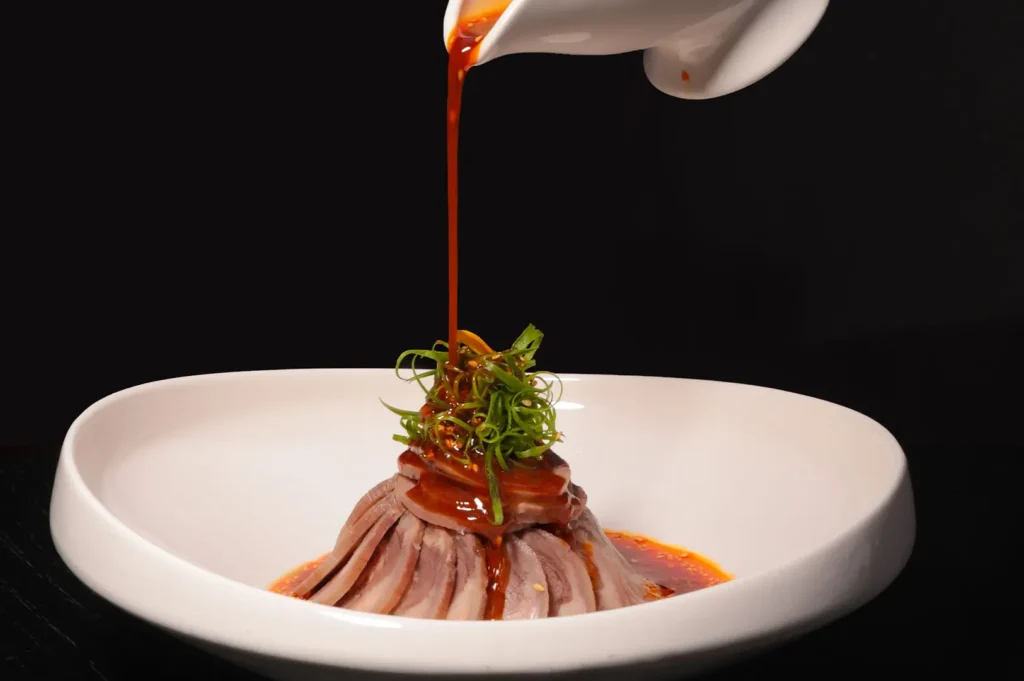
A chef with strong, repeatable plating may only need us to turn the plate slightly.
Maybe one piece of protein is hiding behind another.
Maybe the garnish is casting a distracting shadow.
Maybe the camera angle sees an empty gap the diner does not notice from their seat.
Our guide to food styling for menu photography explains our preference for keeping the dish recognisable and truthful.
If the plate already works, leave it alone.
Styling Becomes Useful When the Camera Changes the Problem
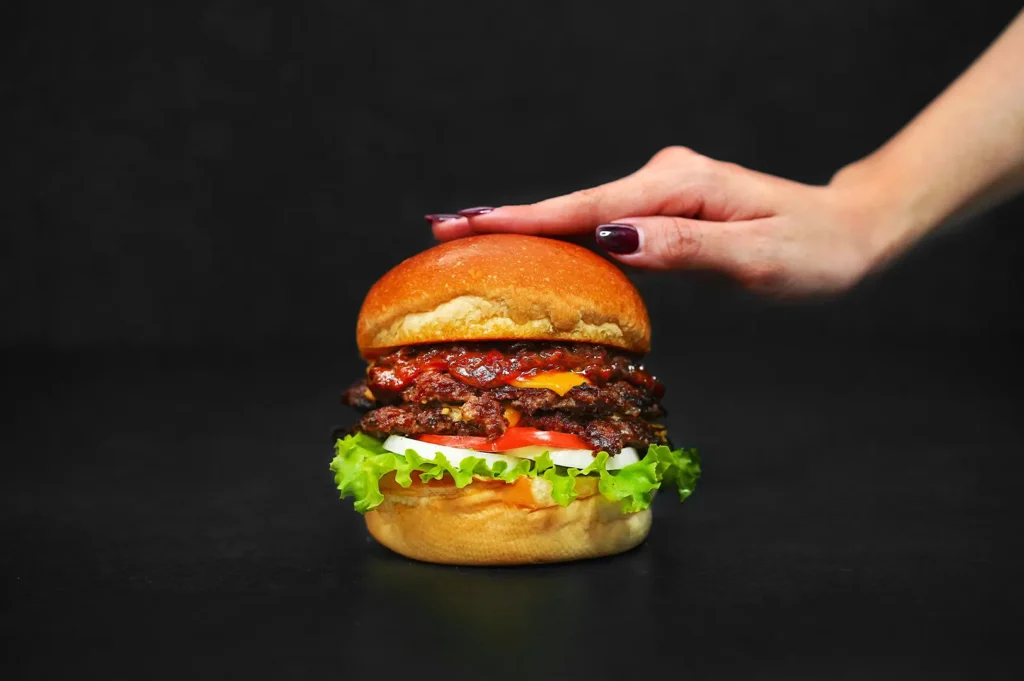
Food behaves differently during a shoot.
Sauce sits.
Leaves wilt.
Ice melts.
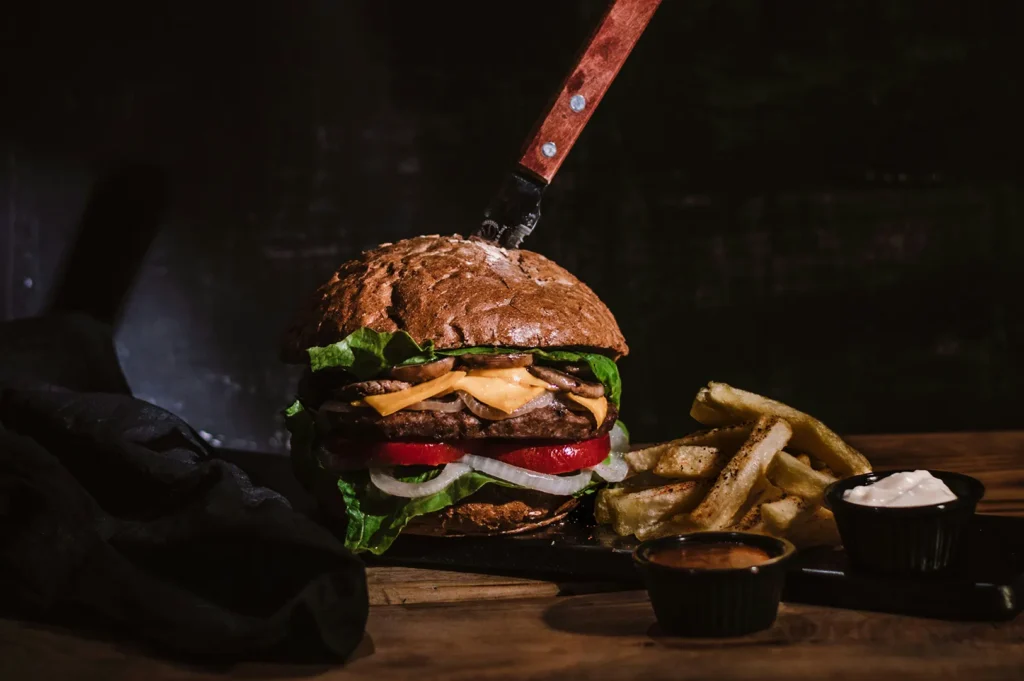
A burger may need its layers adjusted so customers can see what is inside.
Adobe's food photography guidance explains that professional productions often involve food stylists while also emphasising that styling should make the food appetising rather than simply chasing perfection. Adobe's guide to food photography and styling
For us, the important part is collaboration.
We should not quietly redesign a chef's dish because it photographs better.
We ask.
The Stylist and Chef Solve Different Problems
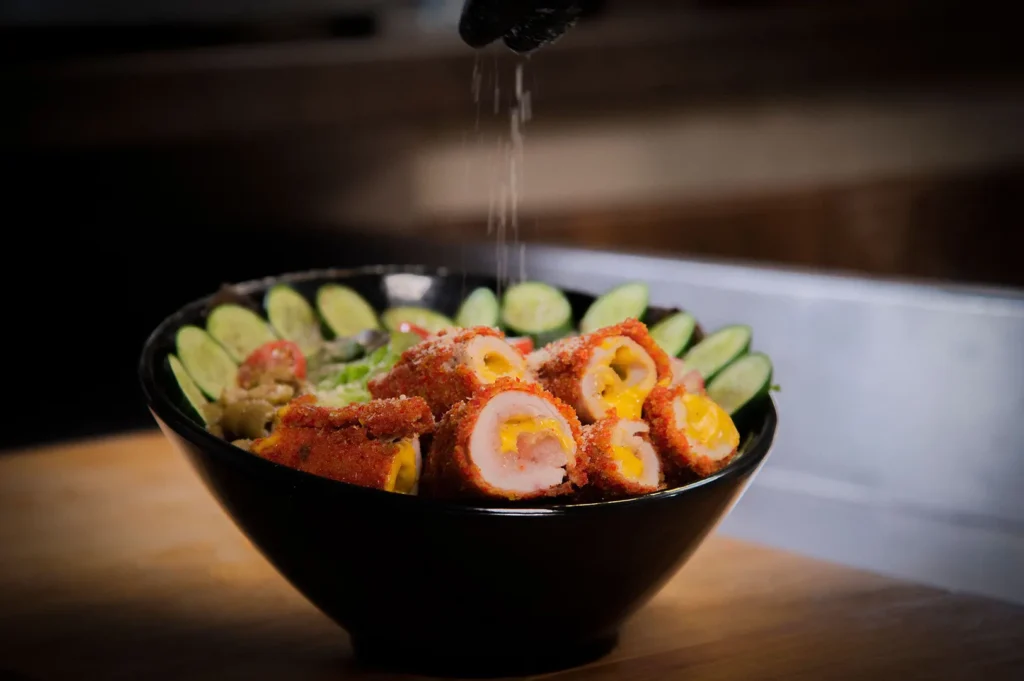
The chef is responsible for the food as a dish.
The stylist thinks about how that dish reads from one particular camera angle for a particular purpose.
Those perspectives overlap, but they are not identical.
On a larger commercial shoot, dedicated styling may make sense.
On a smaller restaurant shoot, the chef, photographer and restaurant team may be perfectly capable of solving the presentation together.
A Singapore food photography professional should be able to recognise the difference rather than automatically adding complexity.
Keep the Customer in the Room
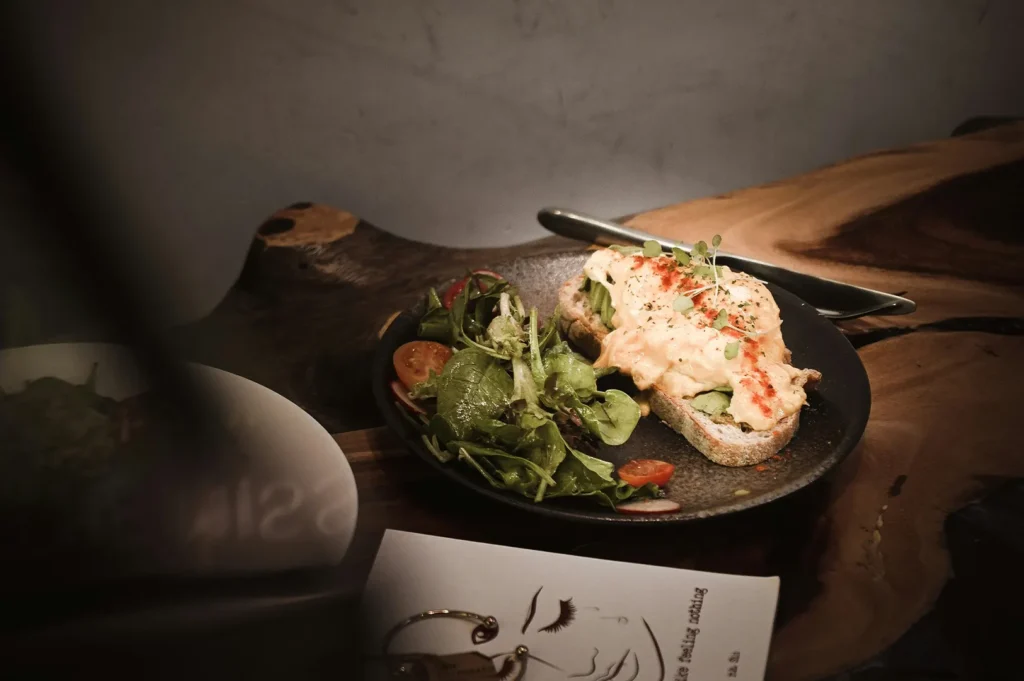
Whenever we adjust food, we ask one final question:
Would the diner still recognise this when it arrives?
If the answer starts becoming uncertain, we have gone too far.
The best food styling supports the chef's work. It does not compete with it.
The chef makes the dish worth eating.
Our job is to make sure the camera understands why.