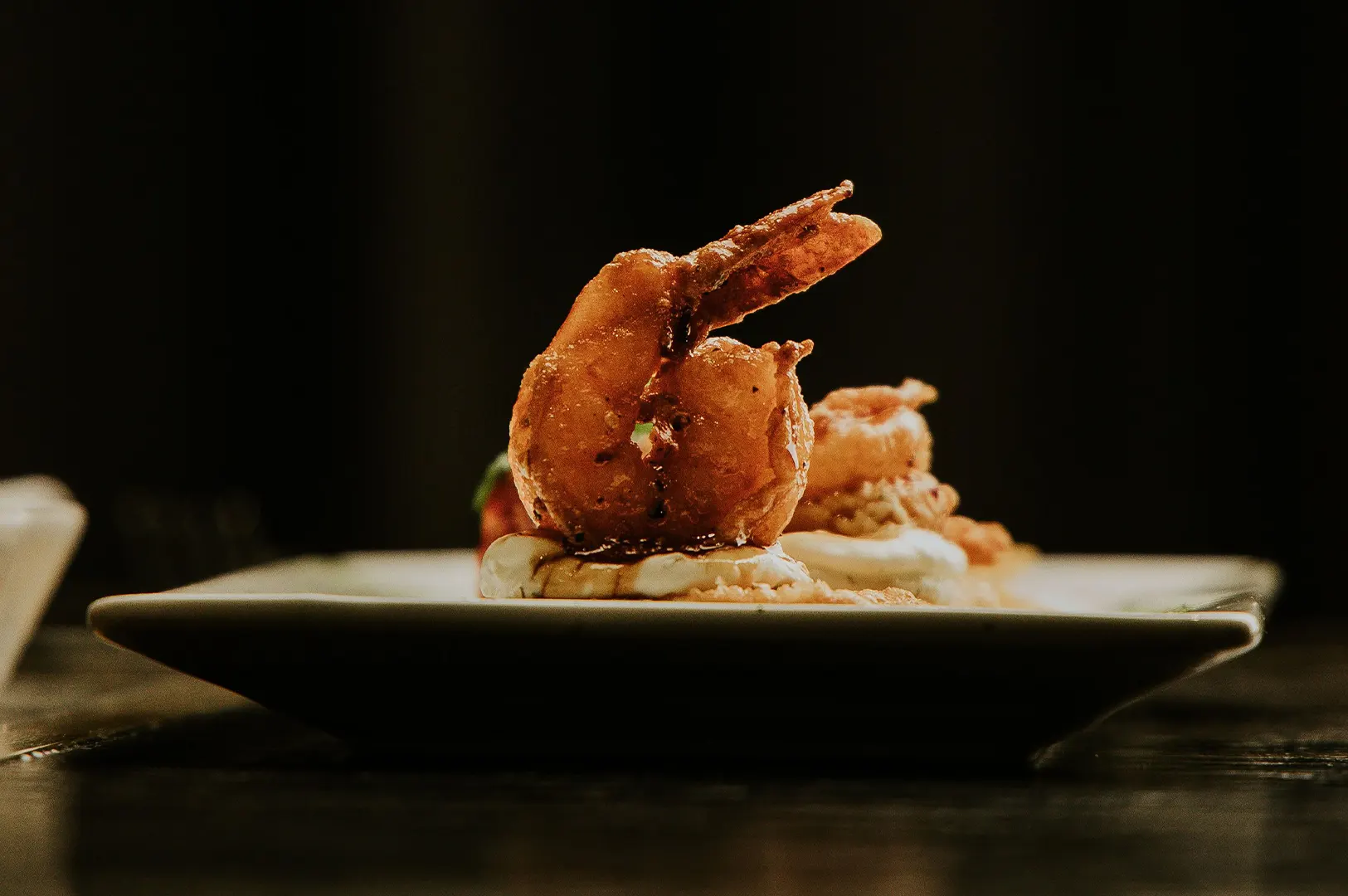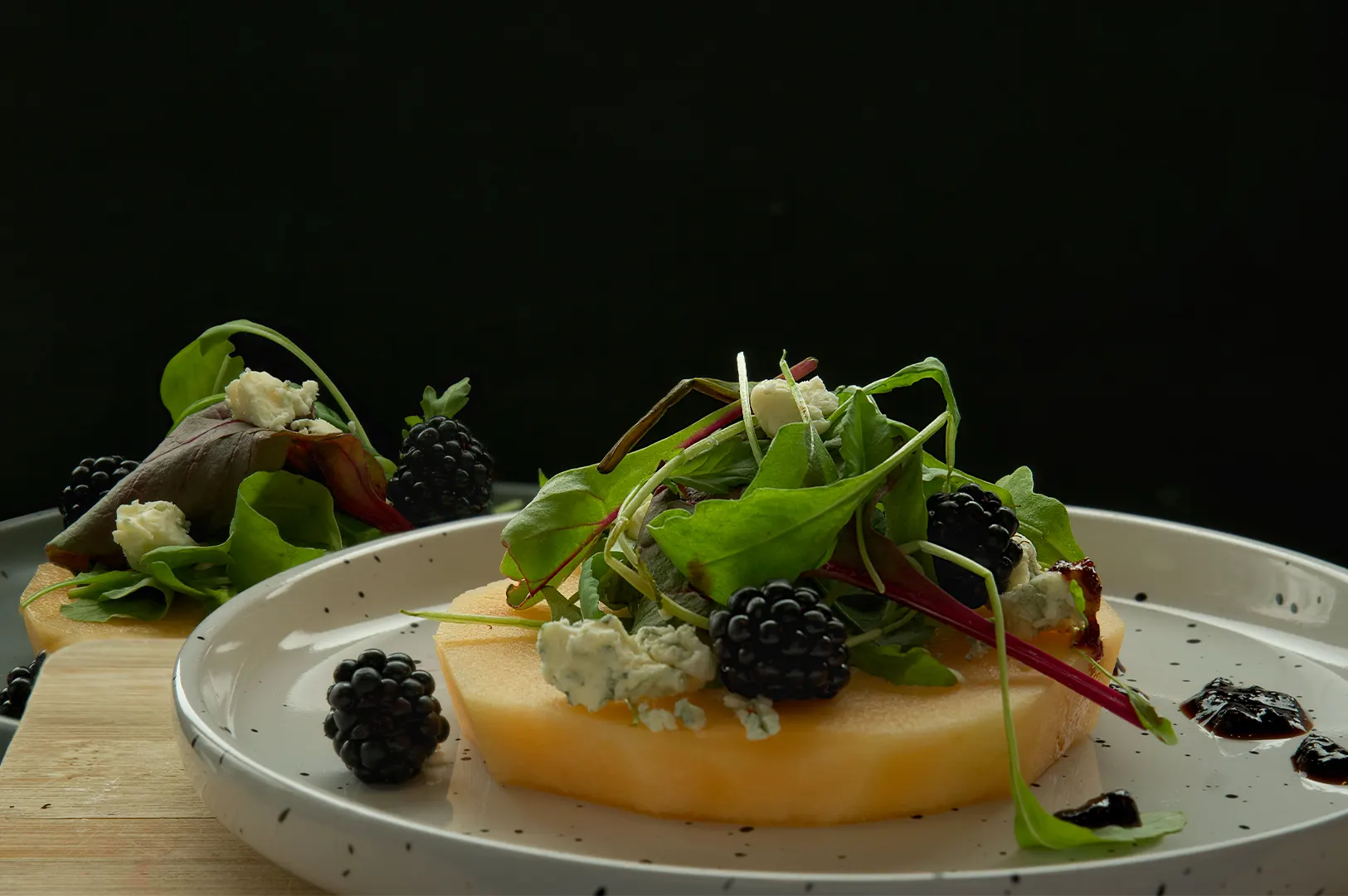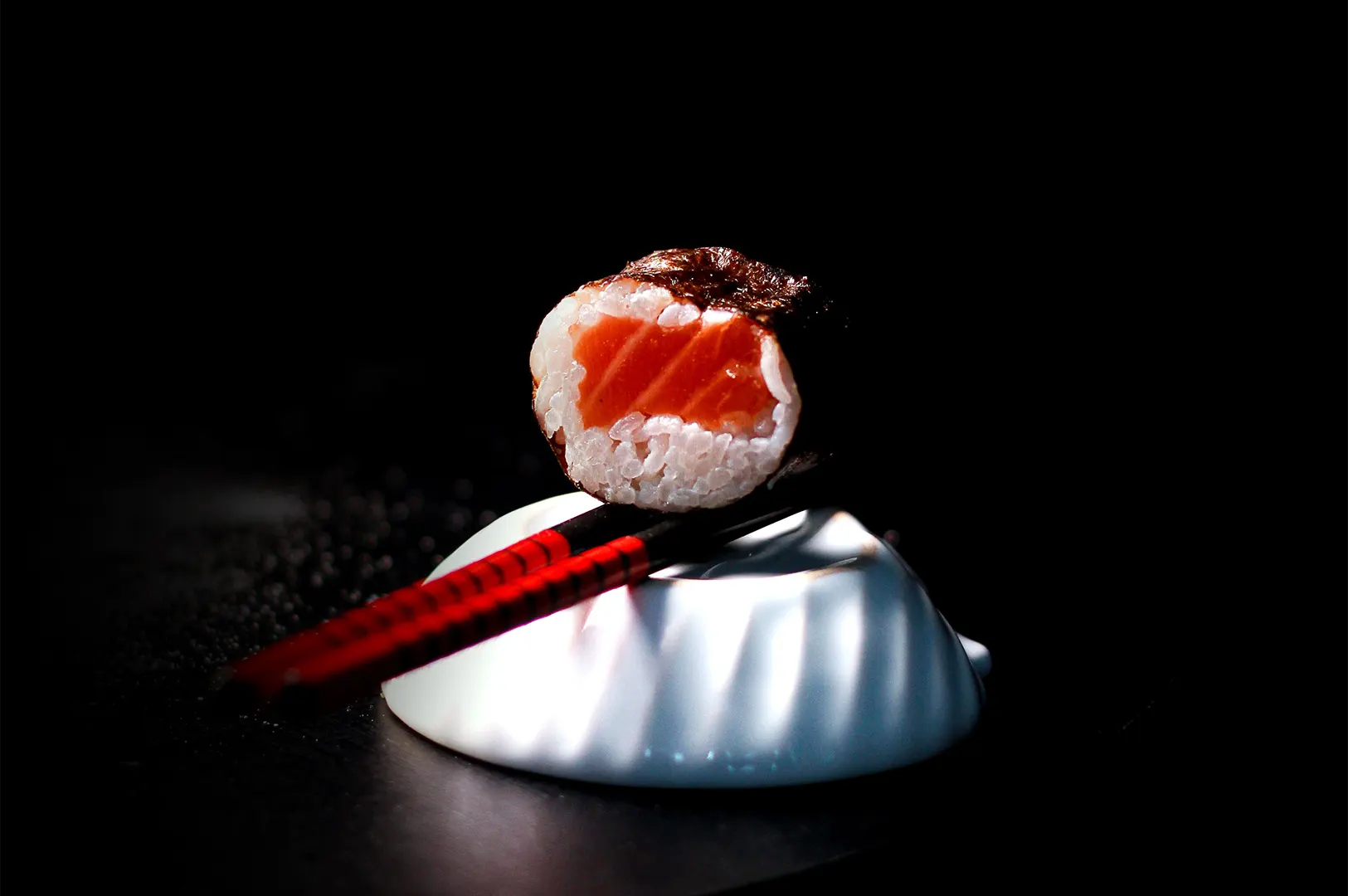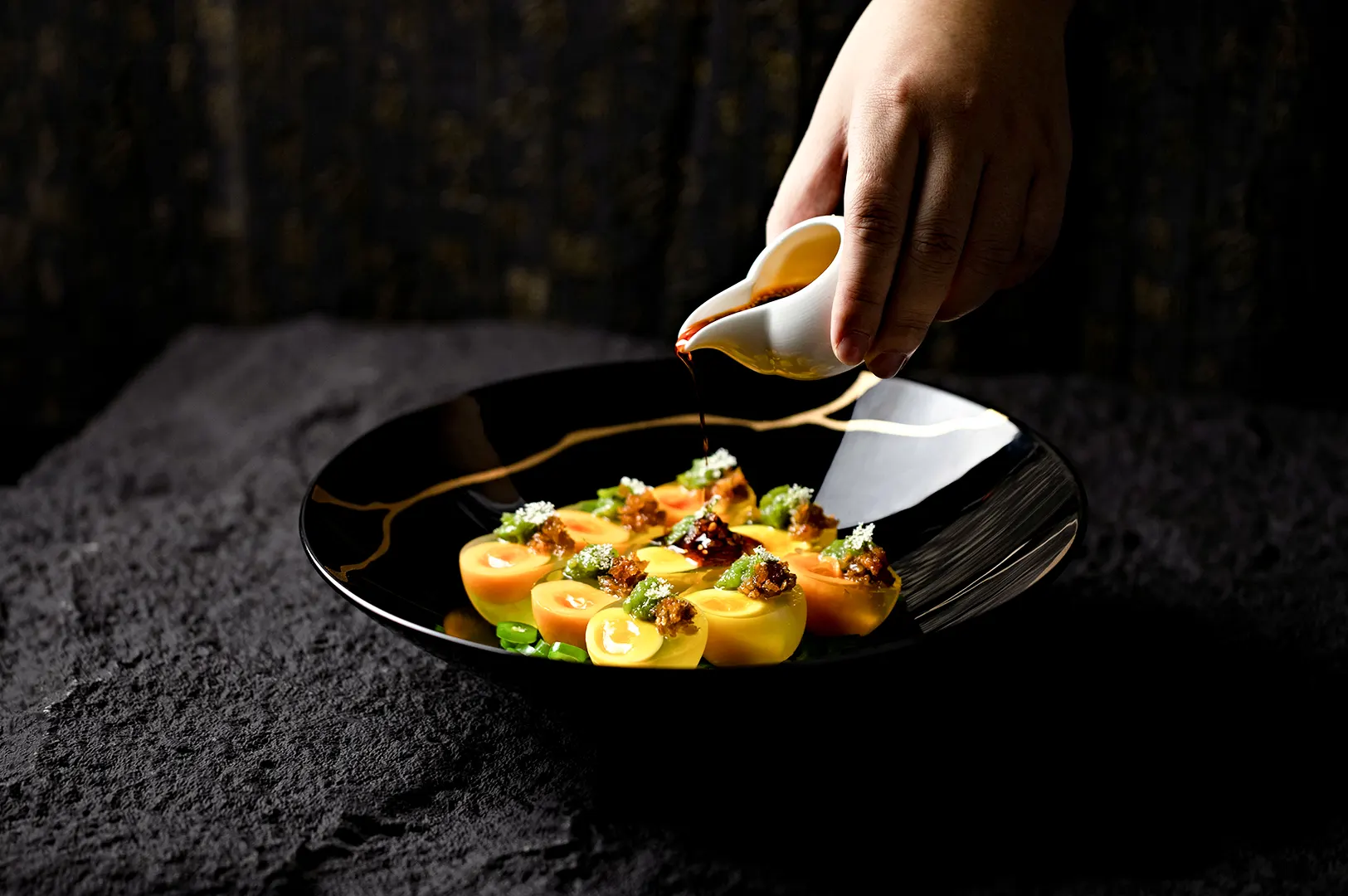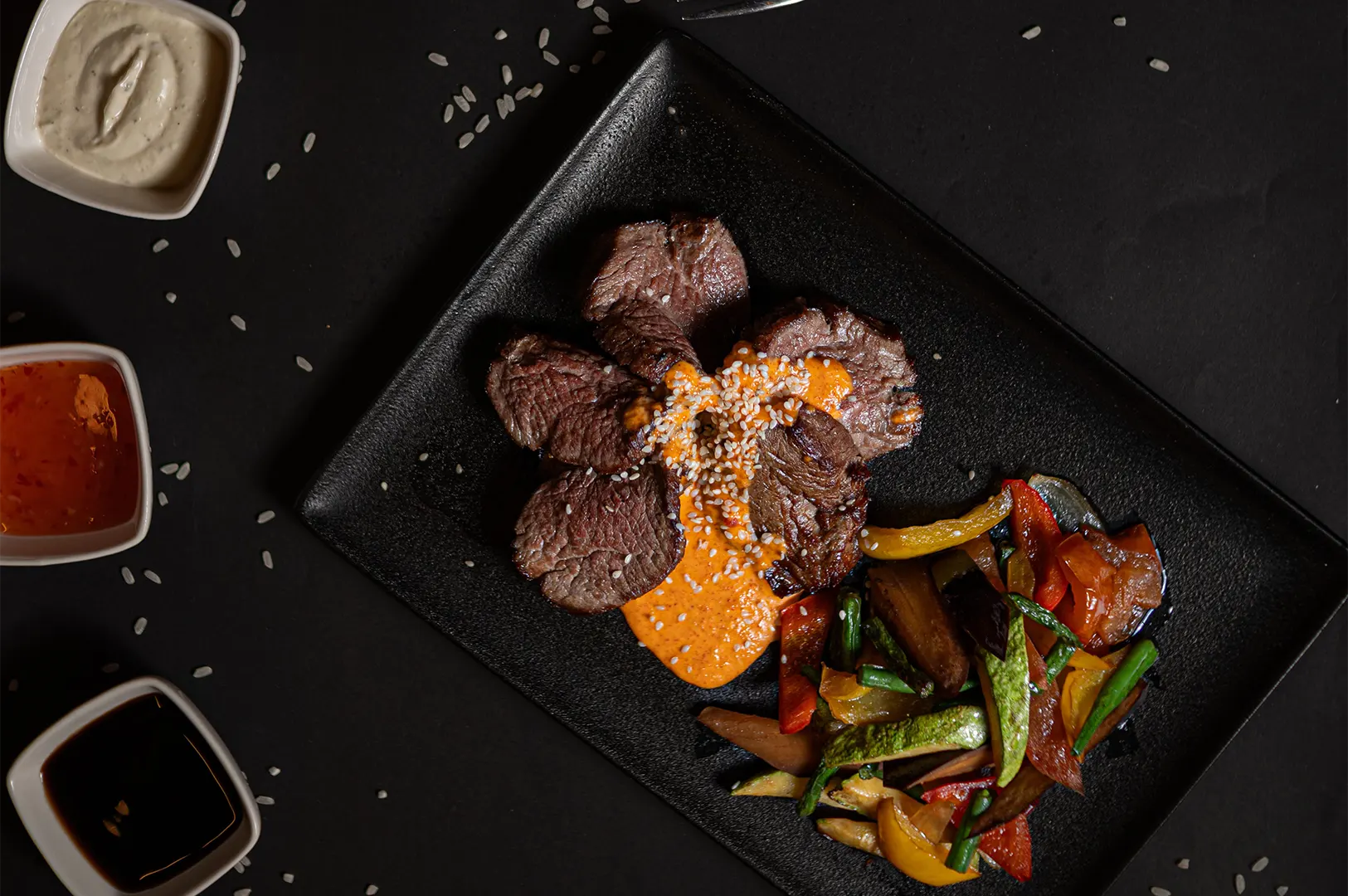
Sometimes a plate looks finished but the photograph does not.
Then a chef reaches in to spoon sauce over it and suddenly the frame wakes up.
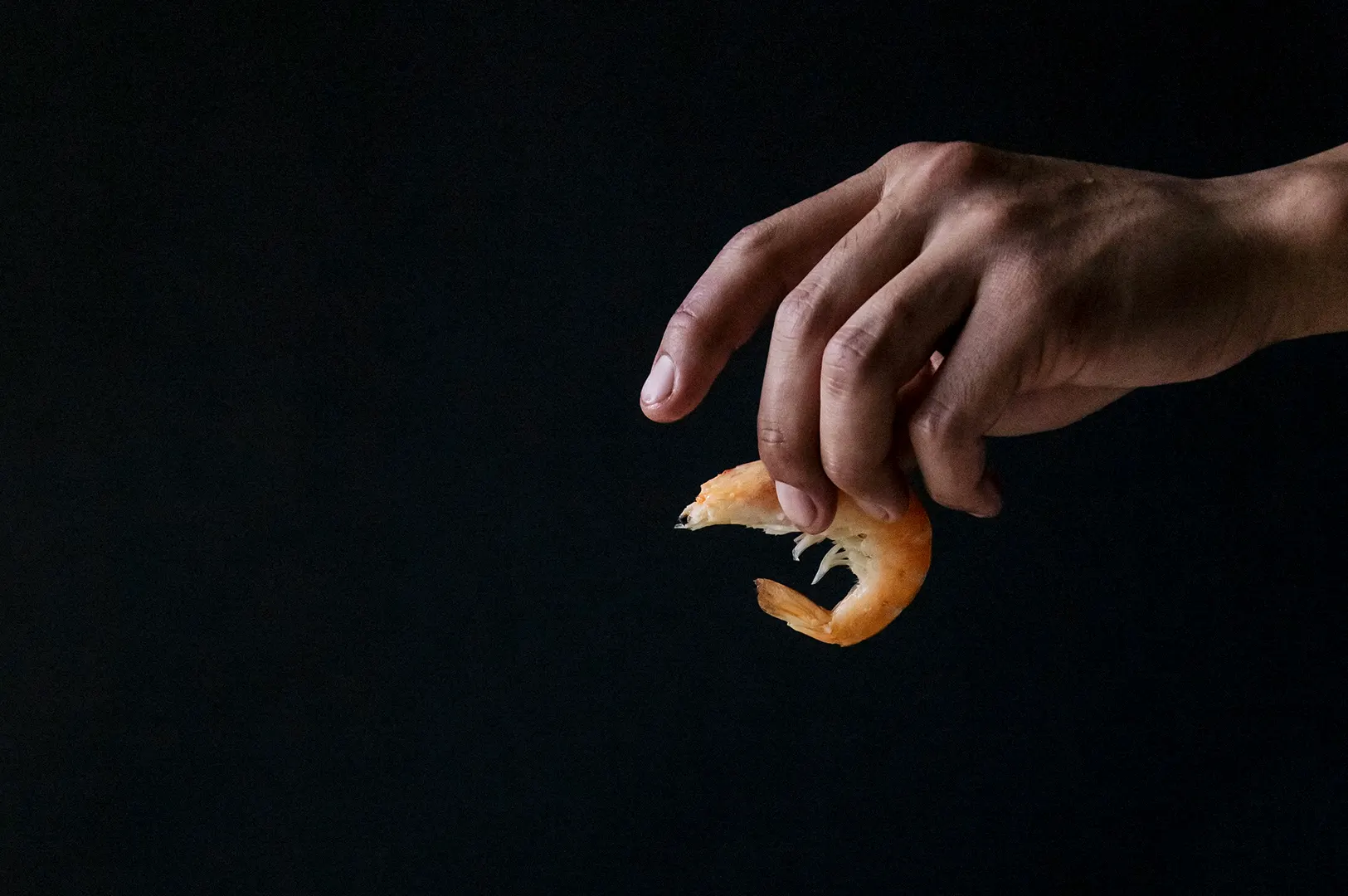
Hands can create movement, scale and a sense that somebody made the food rather than simply placing it under a camera.
They can also block half the dish.
Hands work best when they are doing something useful.
Give the Hand a Job
We rarely add a hand simply because the composition feels empty.
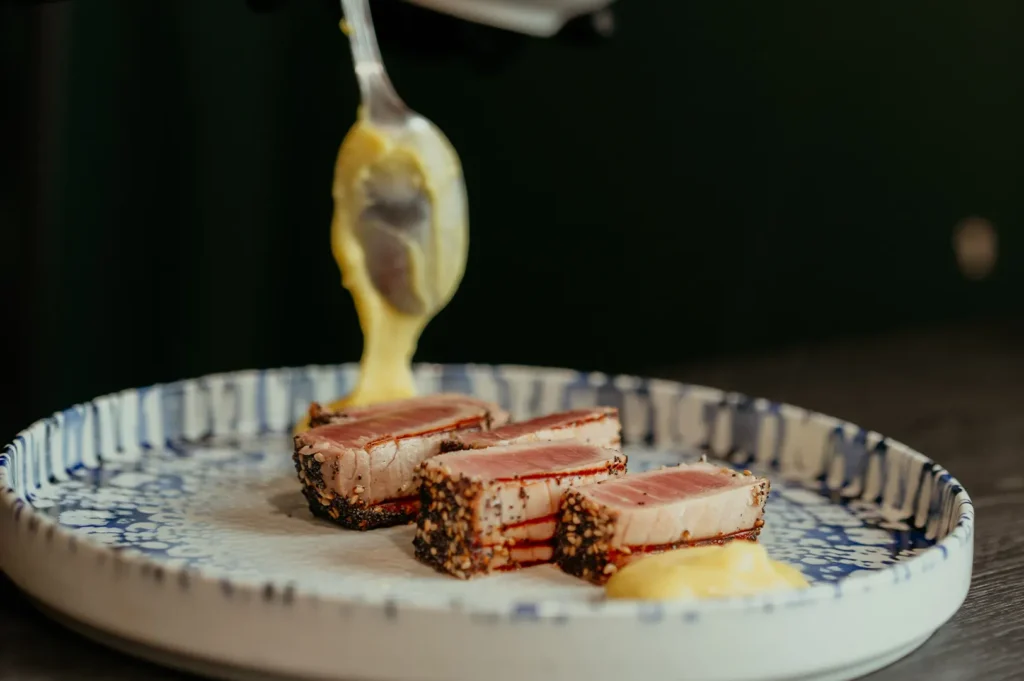
Pouring broth, tearing bread, shaving cheese, plating a garnish or carrying a finished dish all tell us something.
A random hand resting beside the plate usually tells us very little.
Nikon‘s food photography guidance specifically notes that hands can add interest and action to a food image, including pouring and serving moments.
We like that distinction.
The hand should advance the story.
Menu Photograph or Brand Photograph?
This is the first question.
If customers need to see exactly what one dish looks like, a hand can become a distraction.
Photograph the clean menu frame first.
Then bring the human element in.
That approach gives the restaurant both a clear product image and something warmer for marketing.
Our guide to camera angles for menu dishes helps explain why the same dish may need different framing once a hand enters the composition.
Do Not Make the Chef Perform Photography
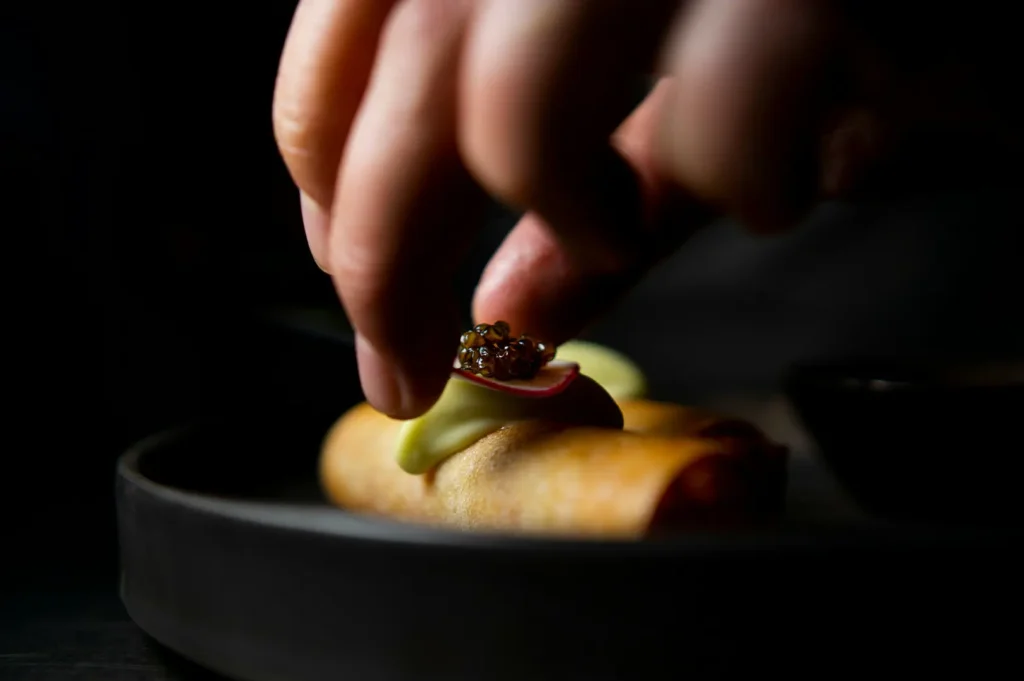
We have had chefs freeze awkwardly with tweezers above a plate because everyone was waiting for the photograph.
That tension shows.
Instead, we ask them to repeat a movement they actually make.
Place the garnish.
Pour the sauce.
Lift the lid.
Then we work around their natural motion.
Adobe‘s profile of food photographer Joann Pai describes planning angles and props ahead of time while also dealing with the reality of photographing professionally in front of chefs and restaurant teams.
Preparation makes these moments less staged.
Think Beyond the Hands
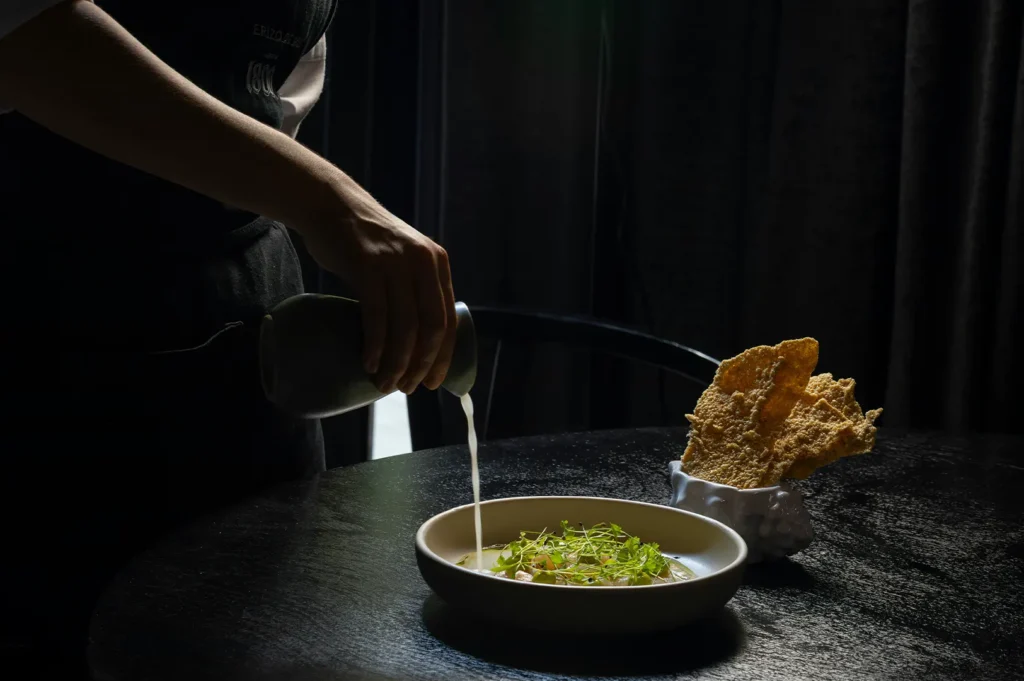
Sometimes the better photograph is the chef.
Our article on chef portrait photography and restaurant trust explores when showing the people behind a restaurant deserves its own image rather than squeezing them into food photography.
Hands are useful when the process matters.
Portraits are useful when the person matters.
A food photography studio should help a restaurant distinguish between the two instead of putting human elements into every frame.
Keep It Believable
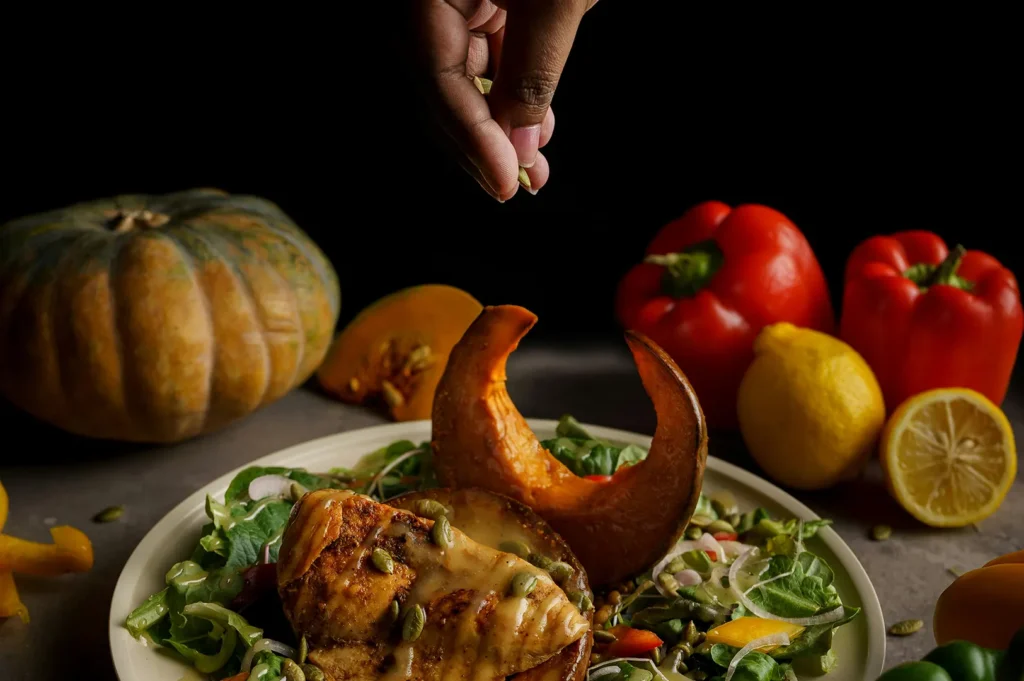
Clean hands, tidy sleeves and sensible positioning matter.
But perfection can become strange.
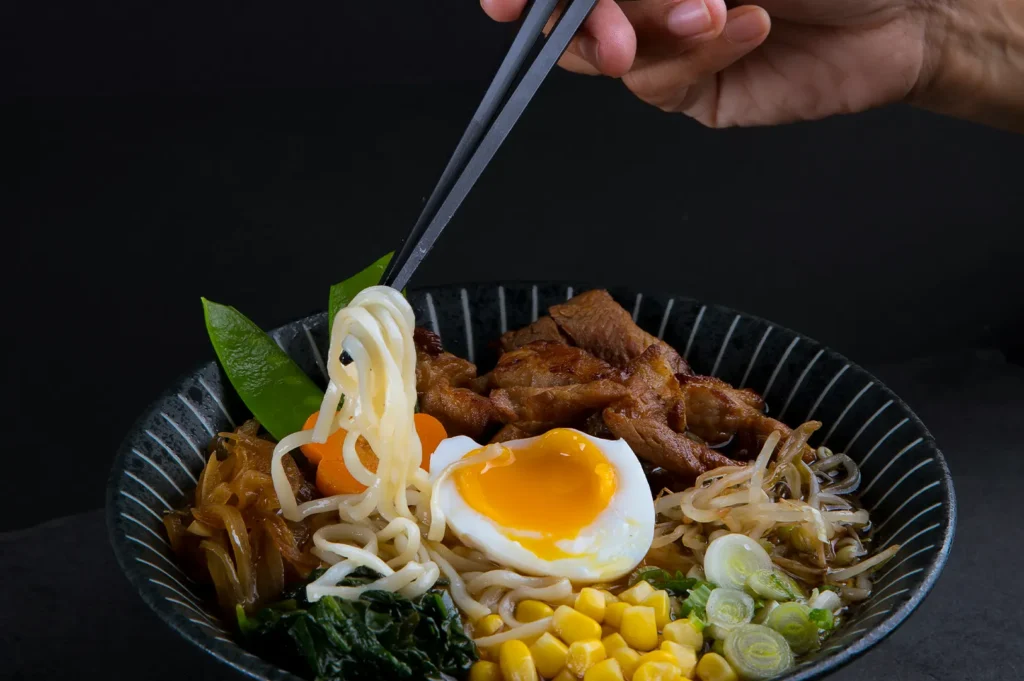
A chef making noodles should look like they are making noodles, not modelling a wristwatch above them.
The strongest human element is usually a real action photographed at the right moment.
When that action adds information, warmth or appetite, keep the hands.
When it simply blocks the food, take them back out.