Clear soup has fooled us more than once.
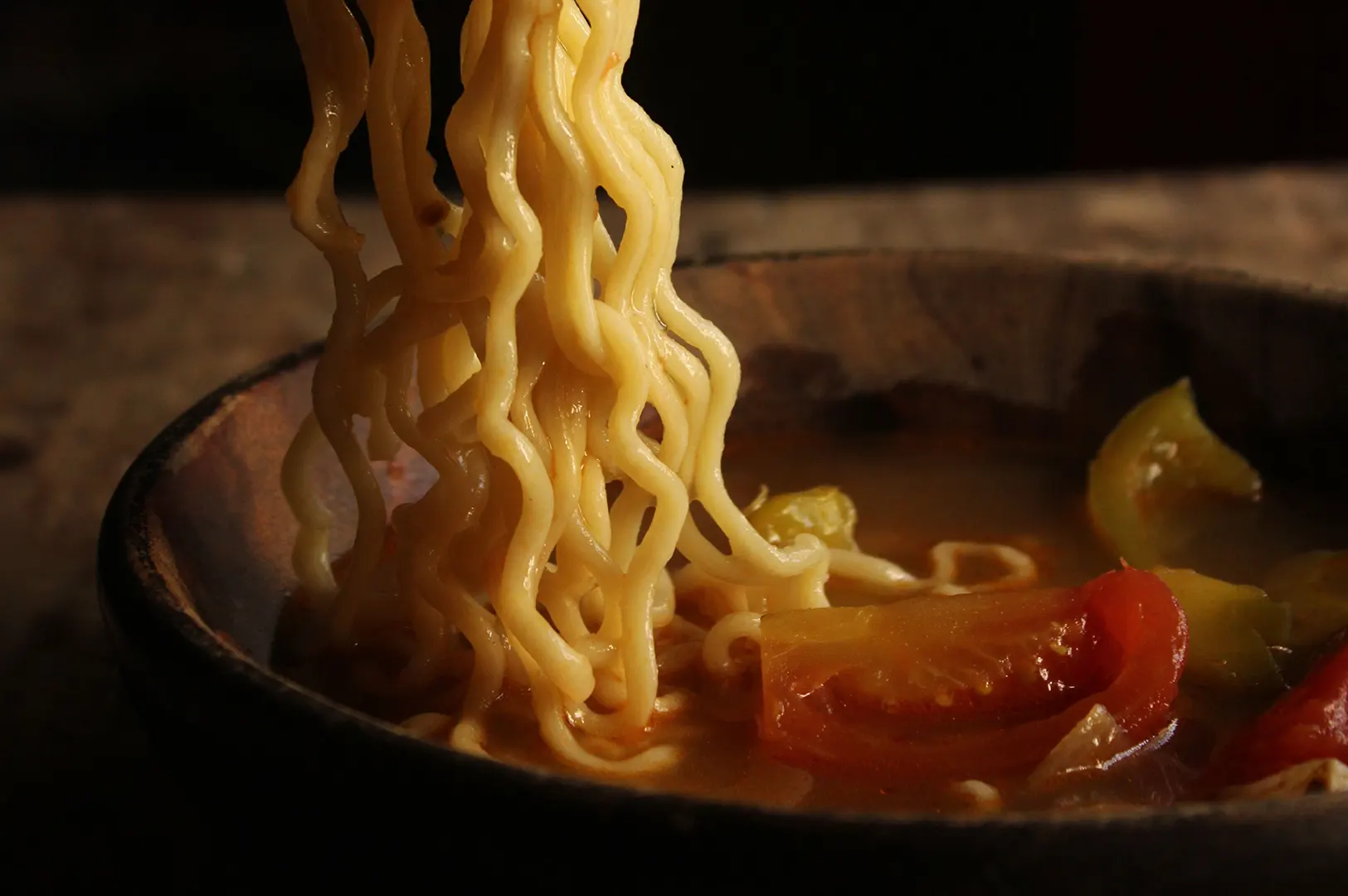
At the table, a bowl of fish soup can look comforting and full of depth. You see the slices of fish below the surface, a little oil catching the light, vegetables drifting through the broth and steam coming off the top.
Then the camera comes out.
Suddenly the broth looks like slightly yellow water.
Clear soup is difficult to photograph precisely because there is so little for the camera to hold onto. The solution is not to make the broth darker. It is to reveal what is already there.
Give the Light Something to Pass Through
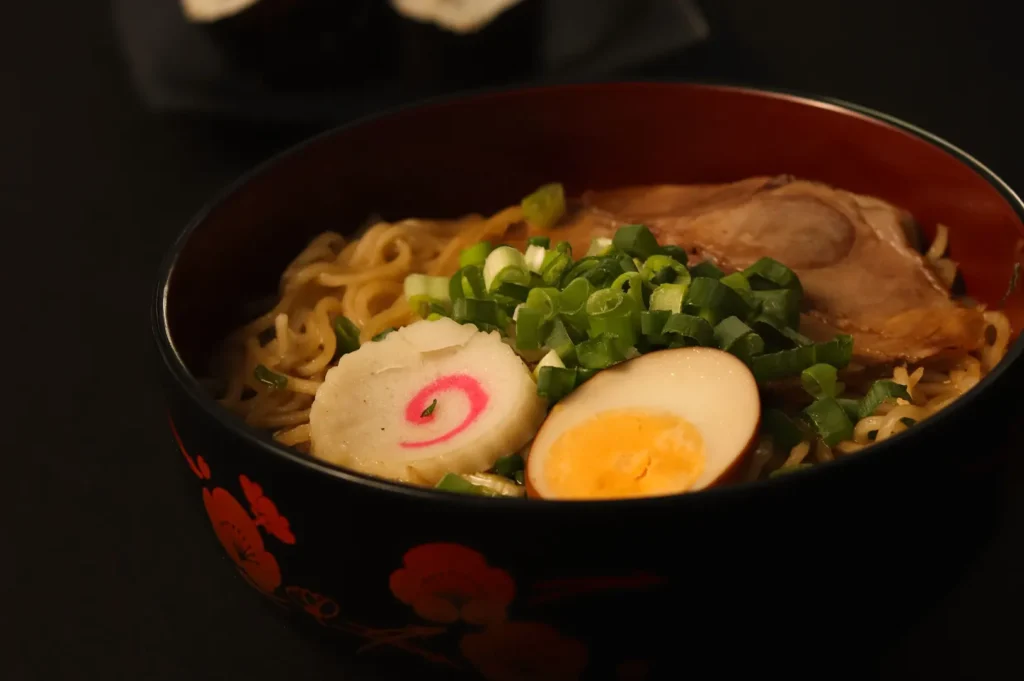
Clear and translucent food behaves differently from thick curry or gravy.
We often position the light slightly behind or to the side of the bowl so it can travel through parts of the broth. Sony‘s food photography guidance demonstrates how backlighting can give food and beverages more depth than flat front lighting.
But stronger light is not automatically better.
Too much light from behind and the broth turns pale. Too little and everything underneath disappears.
We normally move the light first, not the soup.
Let Ingredients Break the Surface
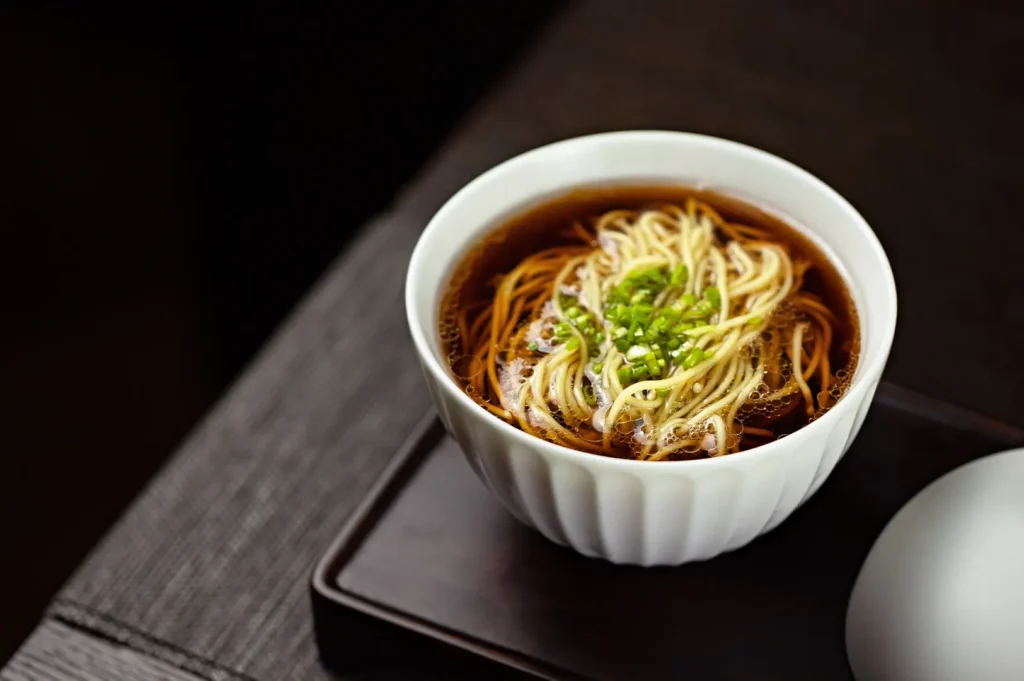
One of the easiest ways to give clear soup shape is to let a few ingredients sit close to the surface.
Not everything.
If every slice of fish, tomato, vegetable and garnish is pulled upwards for the photograph, the bowl stops looking natural.
We look for two or three useful visual clues: perhaps one fish slice, some leafy vegetables and the edge of a tomato.
The broth should still look like the main environment of the dish, not empty space between decorations.
This is also where angle matters. Our guide to camera angles for real menu dishes explains why changing the camera height can completely change what customers understand about a bowl.
Watch the Reflection on Top
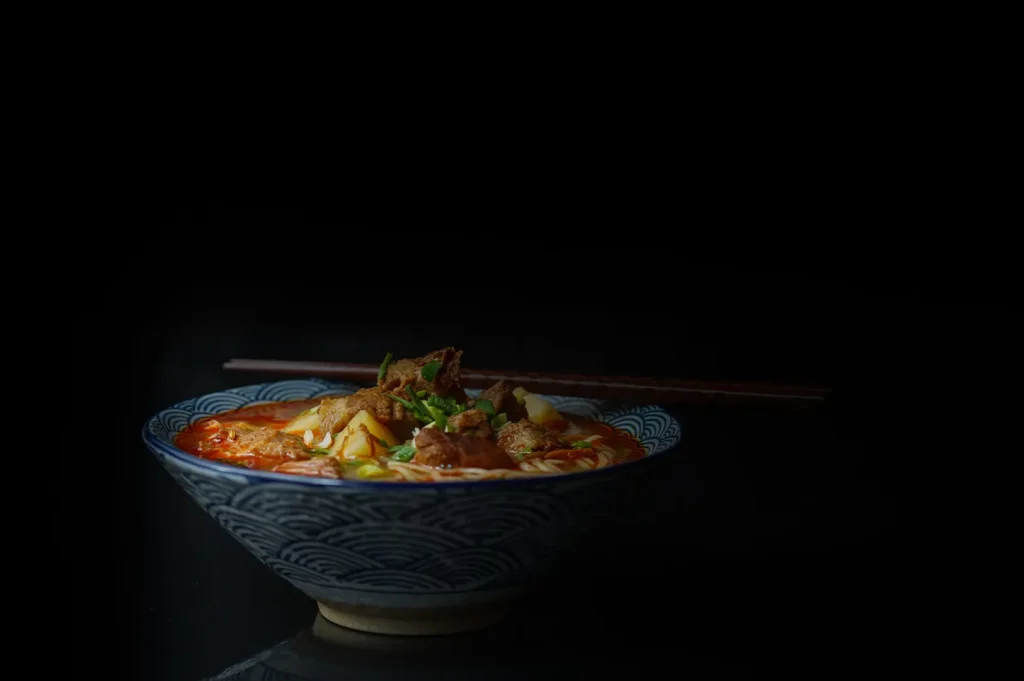
Soup can behave like a mirror.
We have positioned a bowl beautifully, only to find one large white reflection covering half the broth. You cannot see the fish underneath because you are seeing the light source instead.
Moving the bowl a few centimetres or changing the light angle often fixes more than editing ever could.
Adobe also recommends controlling and softening light carefully in food photography rather than relying on harsh direct illumination that can flatten or wash out the subject.
Our article on reducing glare on sauces and plates covers this problem in more detail.
Do Not Artificially Darken a Delicate Broth
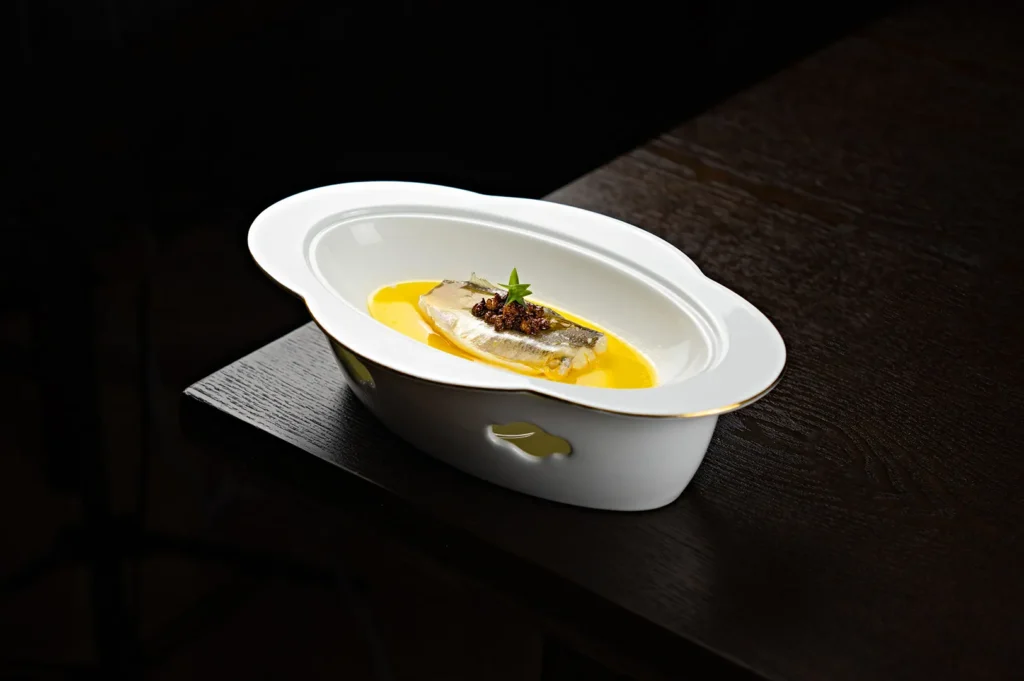
This is the temptation we resist most.
A light Teochew-style fish soup should not suddenly resemble beef stock because the darker version photographs more easily.
We can adjust contrast and exposure carefully, but the photograph still needs to represent the dish customers receive.
A good Singapore food photography team should know when a dish needs more photographic definition and when it simply needs to be left alone.
The aim is not to make clear soup dramatic. It is to make clear soup visible.
When you can see the ingredients, understand the depth of the bowl and still believe the broth is light and delicate, the photograph is doing enough.