Most F&B owners obsess over dish photos (understandably), then wonder why the restaurant still feels “hard to sell” online.
Here is what we see all the time in Singapore: the food looks great, but the room looks like an afterthought. The lighting is harsh. The space feels empty. The vibe that makes regulars stay longer somehow disappears in photos.
That is exactly where restaurant interior photography Singapore matters. Not as “nice to have” content, but as the bridge between curiosity and confidence. Diners do not only want to know what you serve. They want to know what it feels like to sit there. That is the job of ambience photography: to make your atmosphere readable in one glance, without over-selling it.
This guide breaks down what actually works when photographing interiors for Singapore restaurants, cafés, and small chains.
Why Restaurant Interior Photography Matters More Than Owners Think
A diner deciding between three places in the same mall or five cafés in the same neighbourhood, is not comparing your craft statement. They are comparing cues.
Interior photos answer unspoken questions:
- Is it bright or moody?
- Loud or calm?
- Date-friendly or family-friendly?
- Comfortable enough to stay for dessert?
- “Worth going” or “just okay”?
Your food can be excellent, but if your space reads awkward, cramped, or confusing online, people hesitate. Hesitation is the silent killer of bookings.
This is also why interior photography is a core part of a broader visual strategy, not a separate “branding shoot.”
Ambience Photography Is Not Real Estate Photography
This is the mistake we see most often: interior photos shot like property listings.
Real estate images are about maximum visibility. Everything bright. Everything wide. Everything sharp. That works when you are selling square footage.
Restaurants are different. You are selling mood, comfort, and identity.
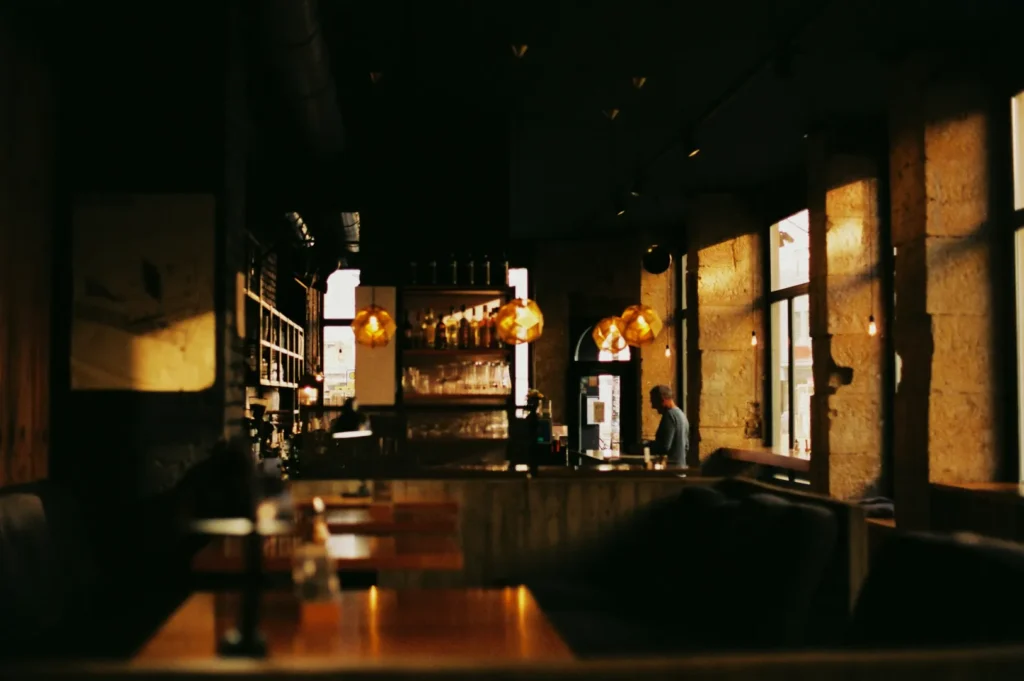
Good ambience photography still needs clarity, but it also needs intention. Sometimes the best photo is not the widest shot. It is the one that makes someone imagine arriving at 7pm, sitting down, and ordering without overthinking.
A strong set of interior photos usually includes:
- One establishing shot that shows “where am I?”
- One hero angle that shows your signature vibe
- Two to three detail scenes that make the space feel lived-in
- One service or staff moment that gives warmth and scale
If you only shoot the room empty and perfectly symmetrical, it can feel sterile. If you only shoot close-ups of décor, it can feel like you are hiding the space. You need both.
The Singapore Lighting Reality: Mixed Light Is Your Main Problem
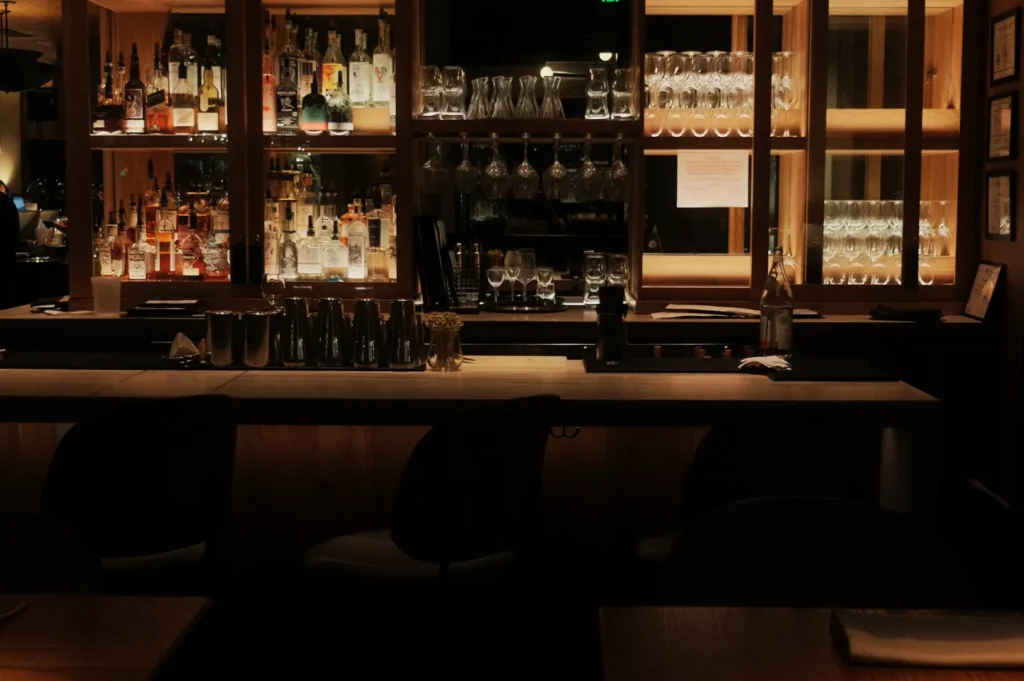
Singapore interiors are often a lighting soup: warm downlights, cool daylight from the shopfront, neon signage, plus reflections from glossy tiles or stainless surfaces.
This is why restaurant interior photography Singapore is tricky even for owners with good phones. The room might look fine to your eyes, but the camera sees colour casts and weird shadow patches.
A few practical principles that consistently help:
Work With One “Leader” Light Source
Pick what you want to dominate: daylight, warm ambience, or a controlled added light. When the scene has no leader, it looks messy.
If you want a bright café look, lean into window light and clean up the warm spots. If you want a dinner mood, let the warm practicals lead and control the daylight spill.
Keep Whites Honest
Menus, walls and tabletops in Singapore often turn yellow or green in photos. That can make your place look tired, even if it is not. White balance matters more than people think.
Avoid the “Over-Bright Fix”
Cranking exposure to “show everything” usually kills ambience. It makes warm lighting look flat and removes the depth that makes a space feel premium.
A good interior image should still have shadows. Shadow is what makes the room feel real.
Camera Position, Lens Choice, And Why “Wide” Is Not Always Better
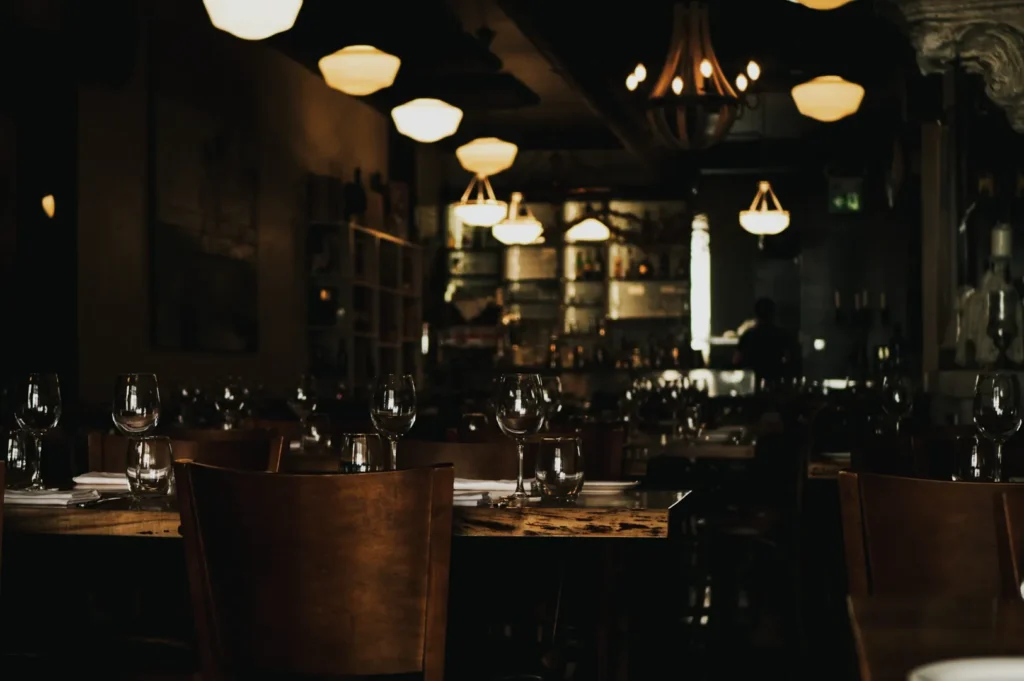
Wide shots help, but wide shots also distort. If you have ever photographed a narrow shophouse unit or a slim mall frontage, you know this pain. Chairs stretch. Tables look warped. Vertical lines start leaning.
A good rule: use wide angles to describe the space, but do not let wide angles define the space.
What works well in most restaurants:
Eye-Level or Slightly Above
This is the most “human” viewpoint. It makes the space feel like a diner’s experience, not a drone fly-through.
A Corner Angle With Clean Lines
A corner angle often gives depth and context without needing extreme wideness. It also lets you use leading lines (banquettes, bar counters, table runs) to pull the viewer in.
One Tight “Atmosphere Frame”
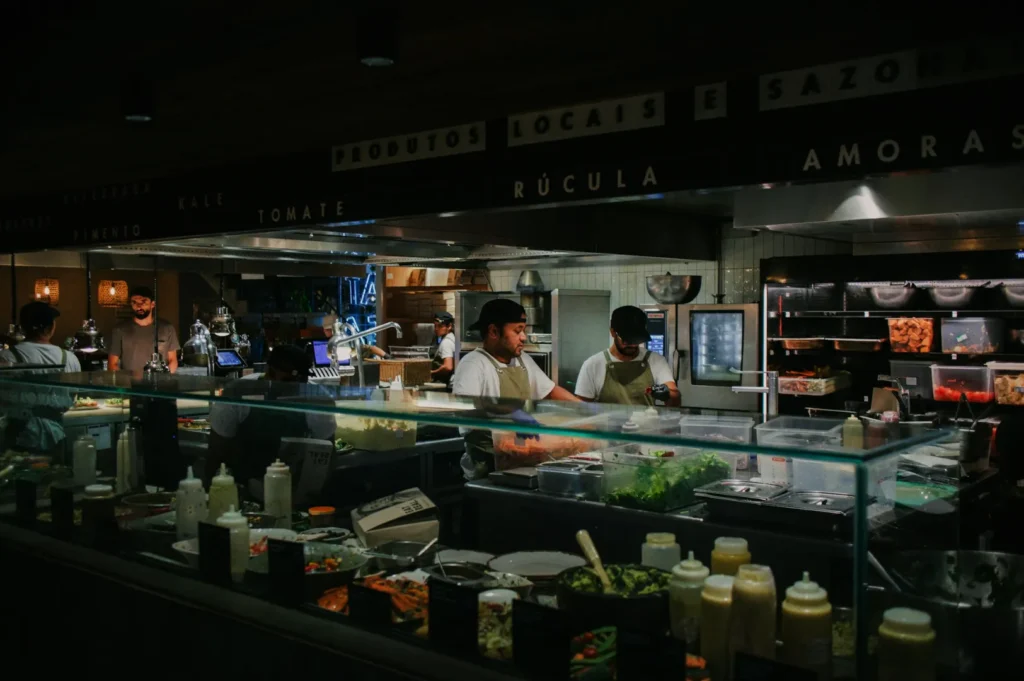
This is where ambience photography shines: a two-top by the window, a bar corner with warm reflections, a chef pass with plates in motion. These photos do not show the whole layout, but they sell the feeling.
If your space is small, do not fight it. A small space can look intimate, intentional, and busy in the right way. Trying to make it look massive usually backfires.
The Details That Make Interiors Feel Alive
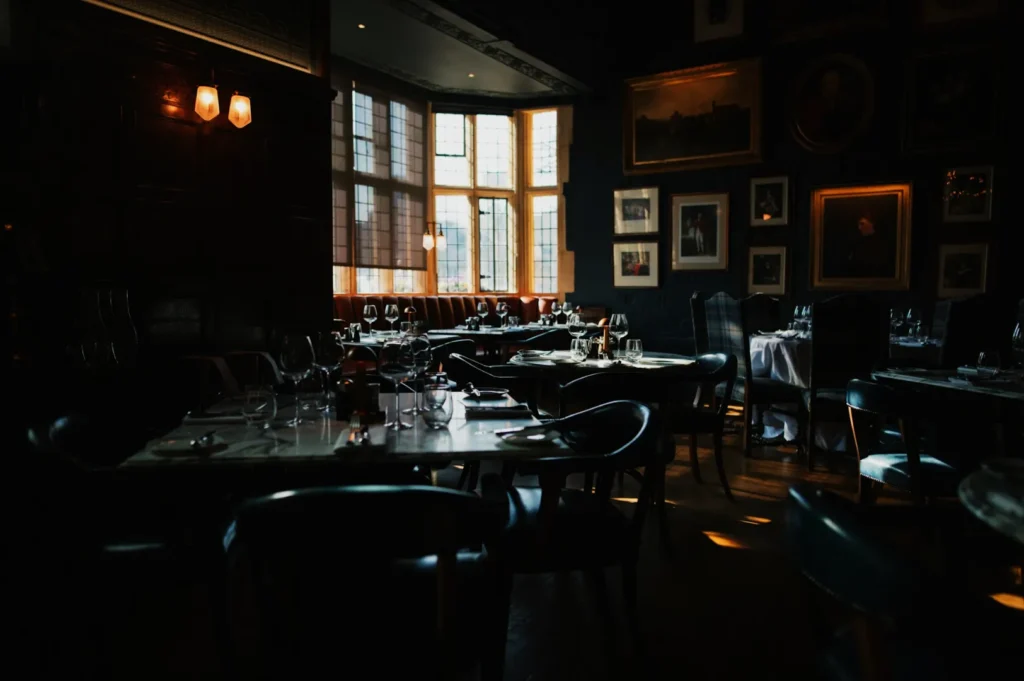
A restaurant photo can be technically correct and still feel dead. The fix is not “more editing.” The fix is life.
Here are details we deliberately look for during interior shoots:
Signs Of Service
A neatly set table, water glasses catching light, a folded napkin, a small menu card. These cues say “ready.”
Texture That Matches Your Brand
Concrete, rattan, terrazzo, brushed steel, wood grain, linen. Texture carries mood. A flat photo loses it, so we angle light to bring it back.
A Light Human Element
Not staged models, not forced smiles. Something believable: a staff member placing cutlery, a hand pouring water, a barista wiping the machine, a chef finishing a plate. It gives scale and signals hospitality.
Controlled Imperfection
A restaurant that is too perfect can feel intimidating. A restaurant that is messy feels risky. The sweet spot is curated reality: tidy, warm, and in motion.
What To Shoot For Different Restaurant Types In Singapore
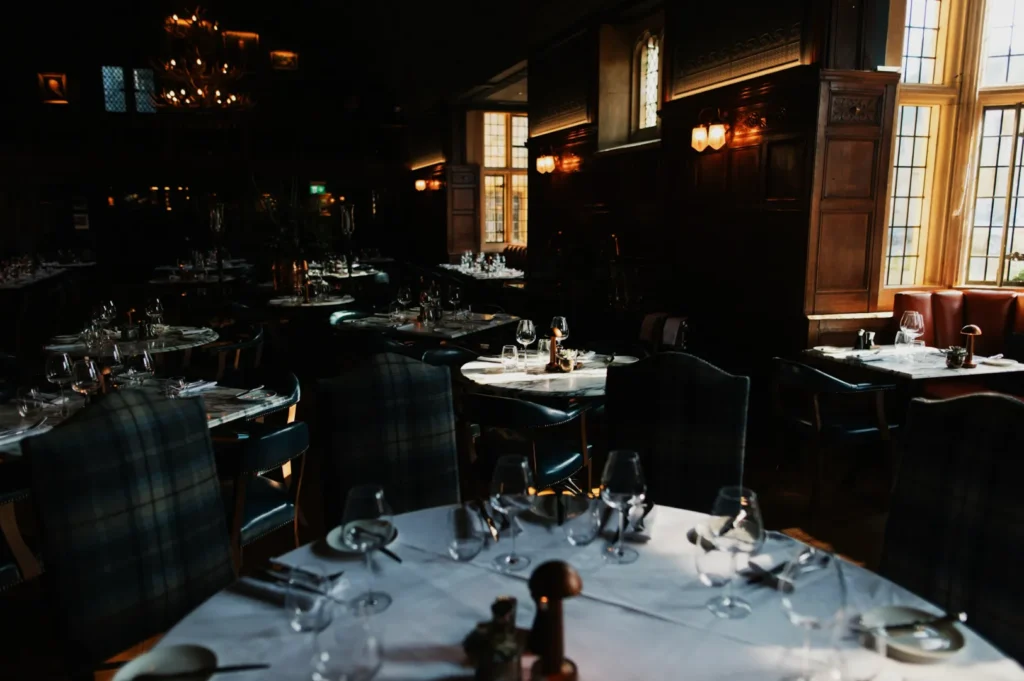
Not every concept needs the same interior story. Here is a simple guide:
Cafés And Coffee Bars
- Bright seating zones, window tables, counter flow
- A hero shot that shows “morning energy”
- Detail frames of pastries, menu boards, coffee work
Casual Dining And Family Restaurants
- Seating comfort and spacing matters
- Clear shots of group tables, booths, private rooms if you have them
- Photos that show the room can handle peak hours
Fine Dining And Tasting Menus
- Mood and restraint over full visibility
- Lighting that feels intentional
- Detail frames: table setting, glassware, materials, chef pass
Hawker-Style Concepts In Aircon Spaces
- Keep some grit, but make it clean
- Let the textures tell the story (tiles, stainless, stools, trays)
- Avoid over-polishing the space into something it is not
Common Interior Photo Mistakes That Quietly Cost You Bookings
These come up again and again:
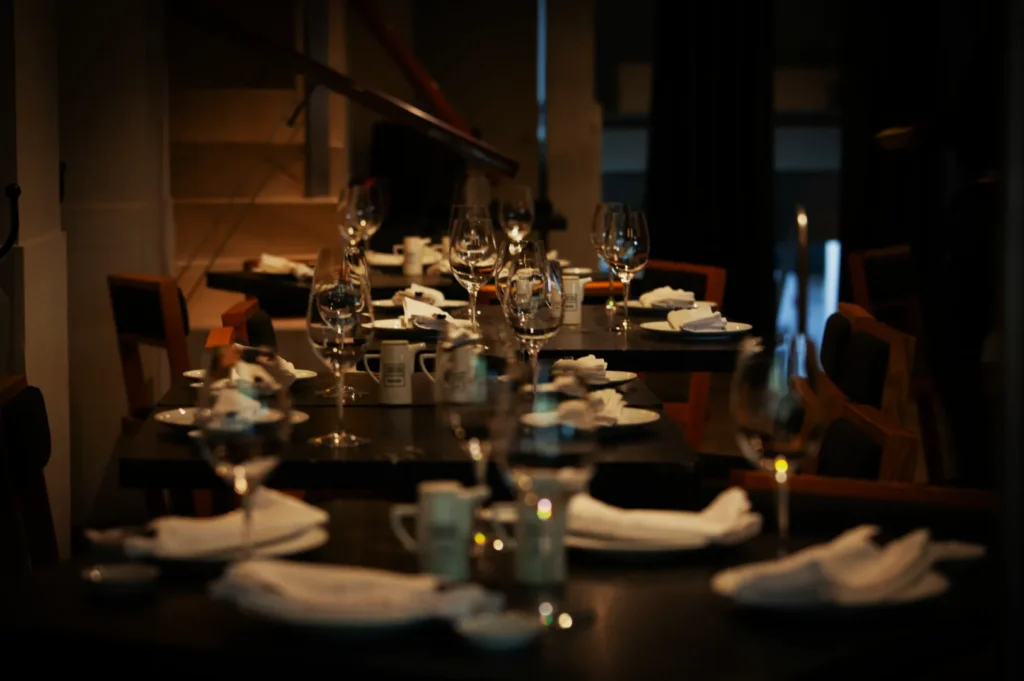
- Empty room syndrome: everything shot before service, no warmth, no scale.
- Over-widening: distorted chairs and leaning walls make the place feel cheap or awkward.
- Colour cast chaos: mixed lighting creates a sickly tone that makes the restaurant feel dated.
- No “anchor” shot: lots of detail photos, but nothing that explains the space.
- Too dark without intention: moody is good, muddy is not.
A useful test is simple: if someone who has never been there looks at your photos, do they understand the vibe in five seconds?
A Practical Next Step
If you want to improve your interior photos quickly, do one small experiment:
Pick one seating corner you actually want people to book. Shoot it in three ways:
- wide establishing view
- eye-level “diner view”
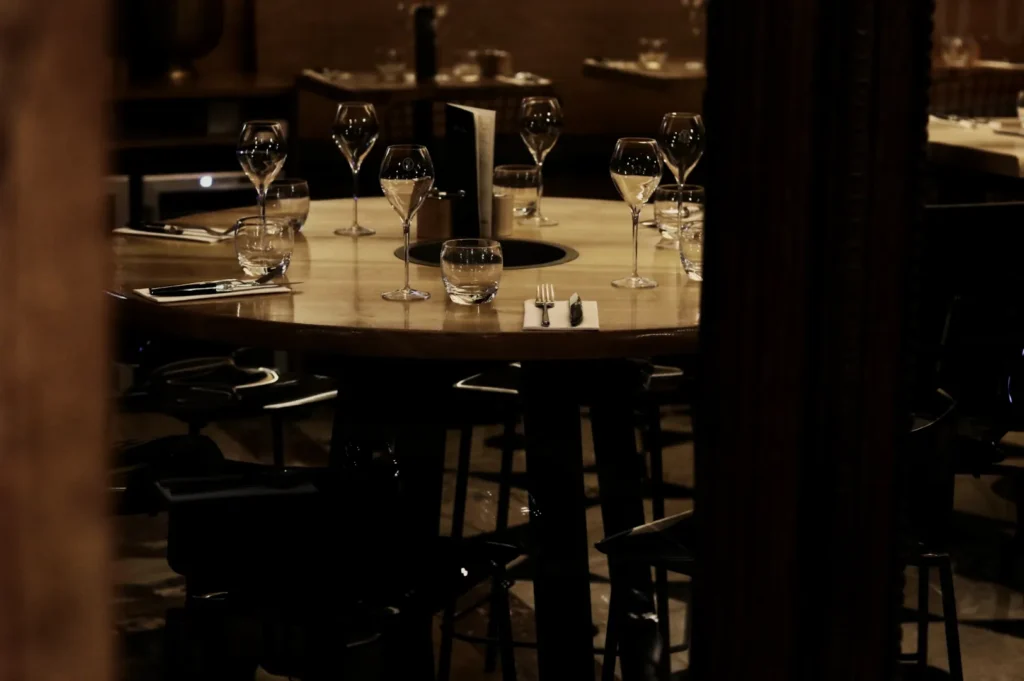
- tight atmosphere frame with a small detail (glass, menu, light reflection)
Compare which one feels most like your real space. That is your baseline.
When you are ready to build a full set that works across Google, reservation platforms, your website, and campaigns, that is where professional restaurant interior photography Singapore becomes worth it. The goal is not “prettier pictures.” The goal is fewer doubts and more confident bookings.
If you want help shaping that visual story properly, Food Photographer Studio can plan and shoot a clean set of ambience photography that fits Singapore interiors, lighting, and how diners actually decide.