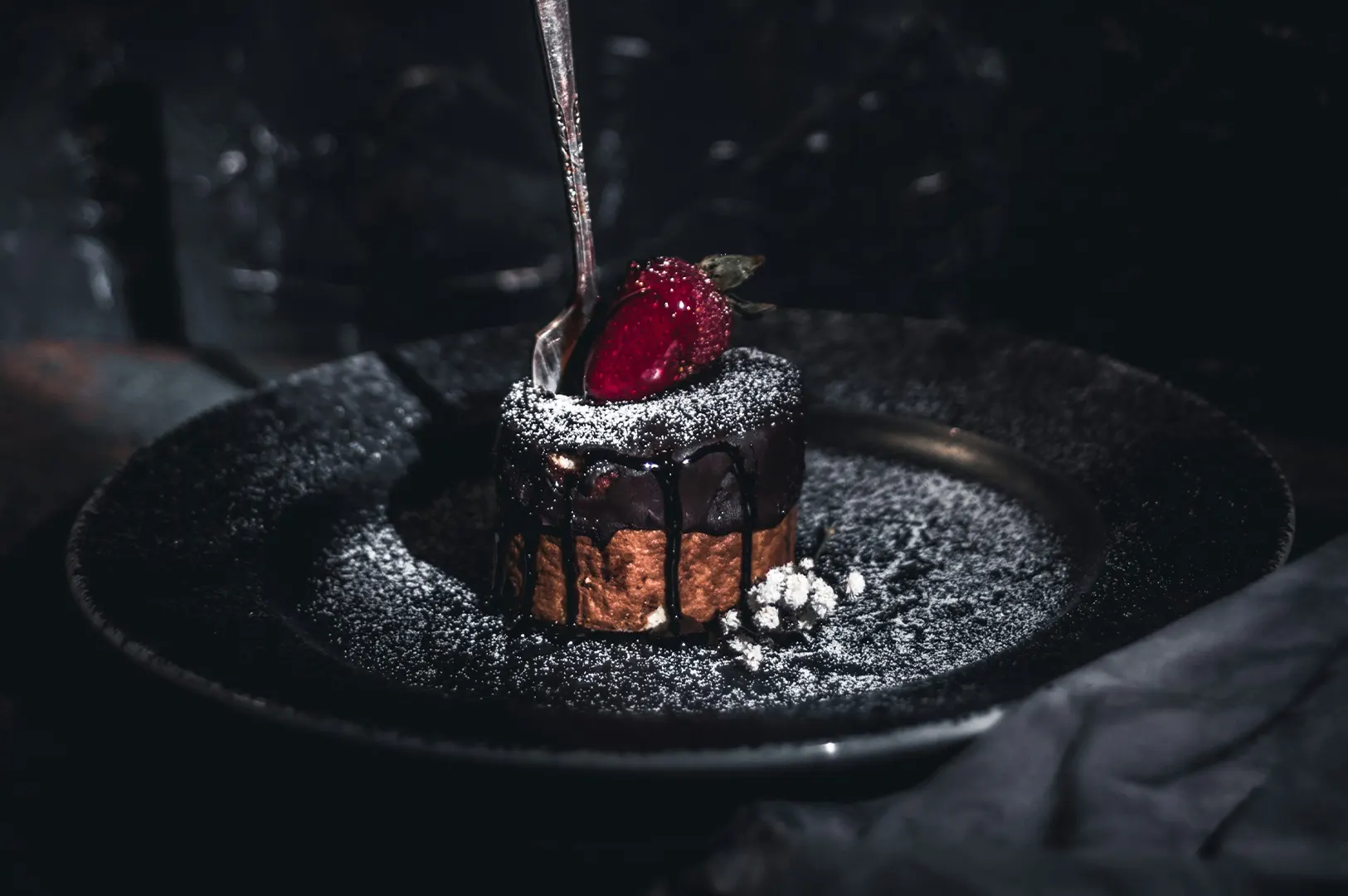
A sharing platter can feed four people and still look strangely small in a photograph.
We have seen this happen with seafood trays, zi char dishes, roast platters and family-style set menus. The food fills the serving plate, everyone on set agrees the portion is generous, then the close crop removes every clue to size.
The customer sees a plate of food. They cannot tell whether it is dinner for one or the centrepiece for a table of six.
When a dish is sold for sharing, scale is part of the product.
Do Not Crop Away the Evidence
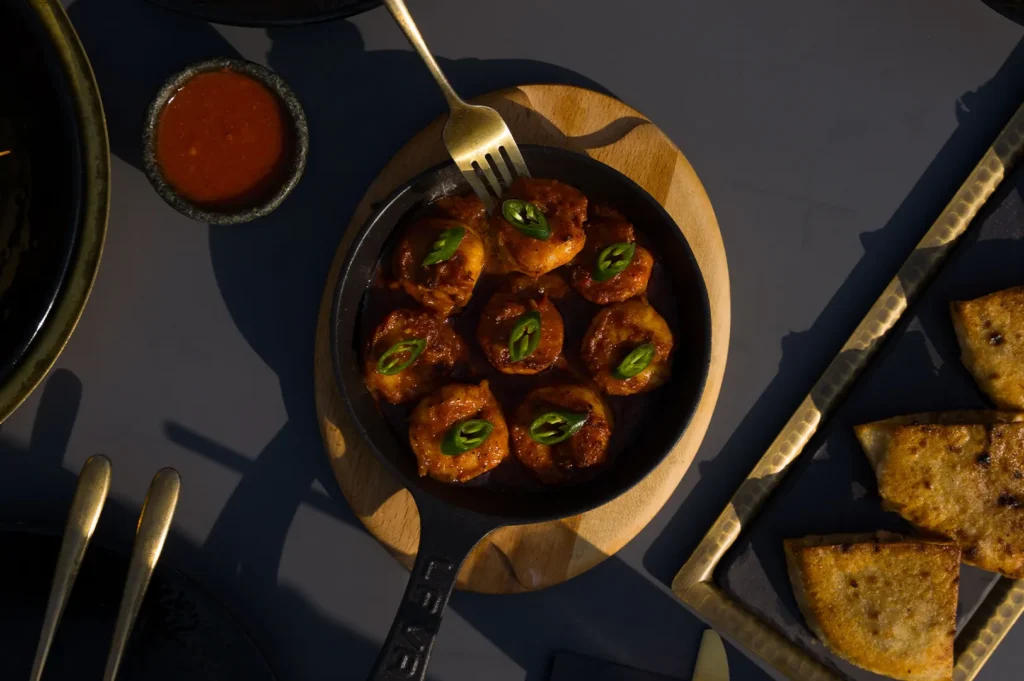
Close-ups are excellent for texture. They are not always good at explaining quantity.
A tight shot of chilli crab claws may look dramatic, but it can hide the size of the serving dish. The same happens with roast meats and family-style curries.
Shopify‘s current product photography guidance describes scale photography as using familiar objects or people to help customers judge size more accurately.
Food is not a handbag or a chair, but the principle is useful.
For sharing dishes, we often include something the diner already understands: serving spoons, rice bowls, side plates, glasses or hands reaching into the scene.
Use Tableware to Explain the Portion
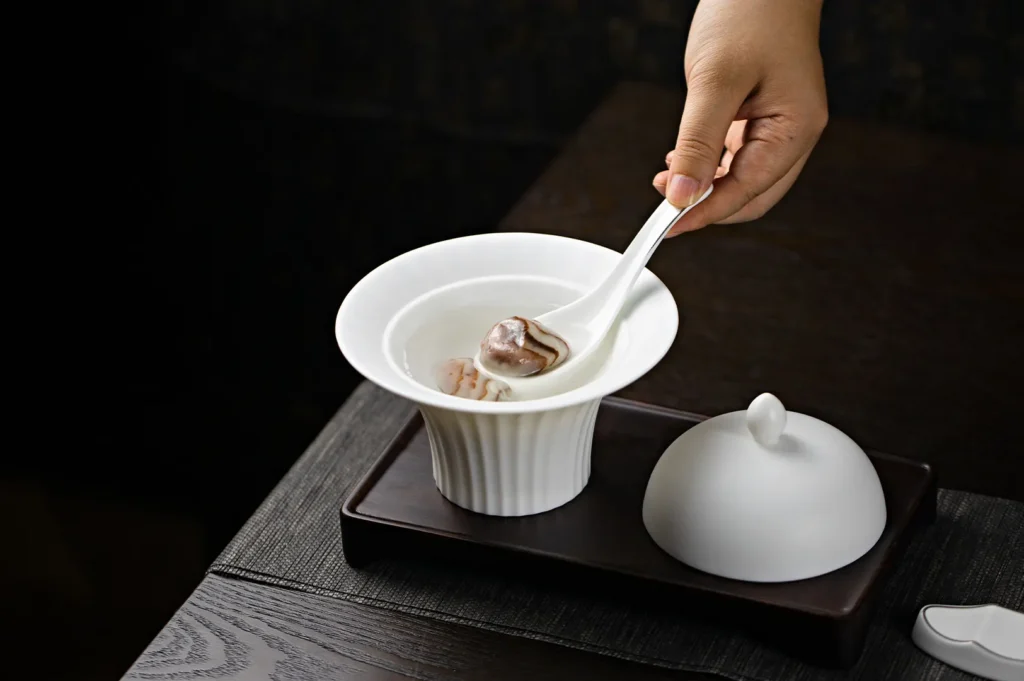
A serving spoon can do more work than a decorative prop.
So can four place settings around a central dish.
We do not need to build an entire dinner party for every photograph. Sometimes the edge of two bowls and a pair of serving utensils are enough to tell the viewer, “this belongs in the middle of the table.”
Nikon‘s food photography guidance discusses using props, different plate sizes and human elements to add context and interest to a food composition.
Props should provide information before they provide decoration.
If you are deciding whether a platter should be photographed overhead or lower down, our guide to camera angles for menu dishes covers the strengths of each approach.
Overhead Is Useful, but Watch the Plate Size
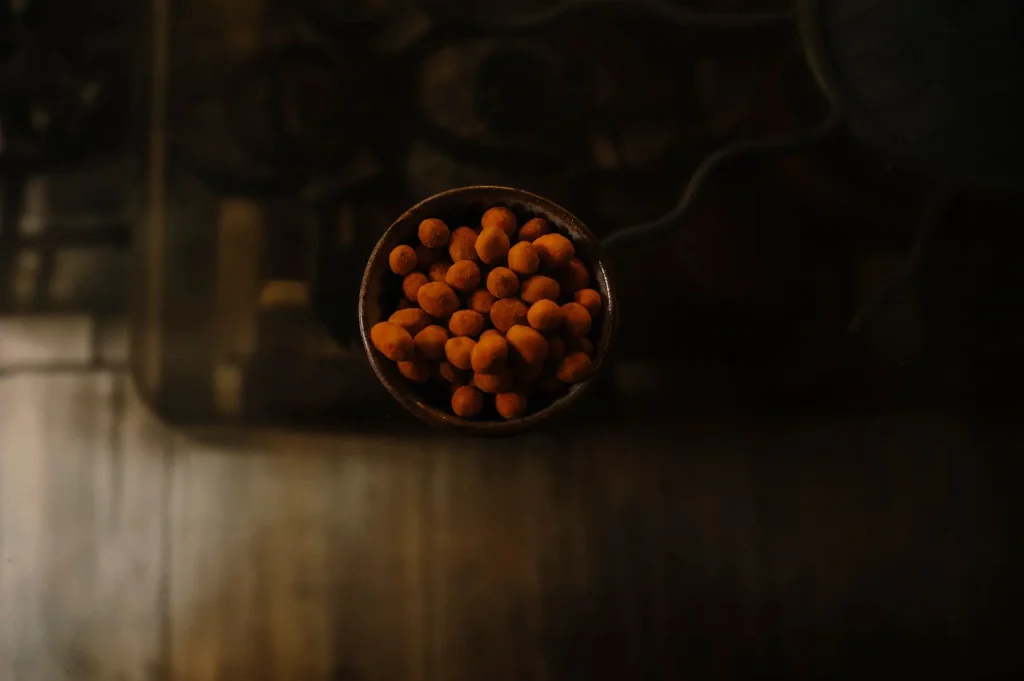
Sharing spreads often photograph well from above because customers can see every component.
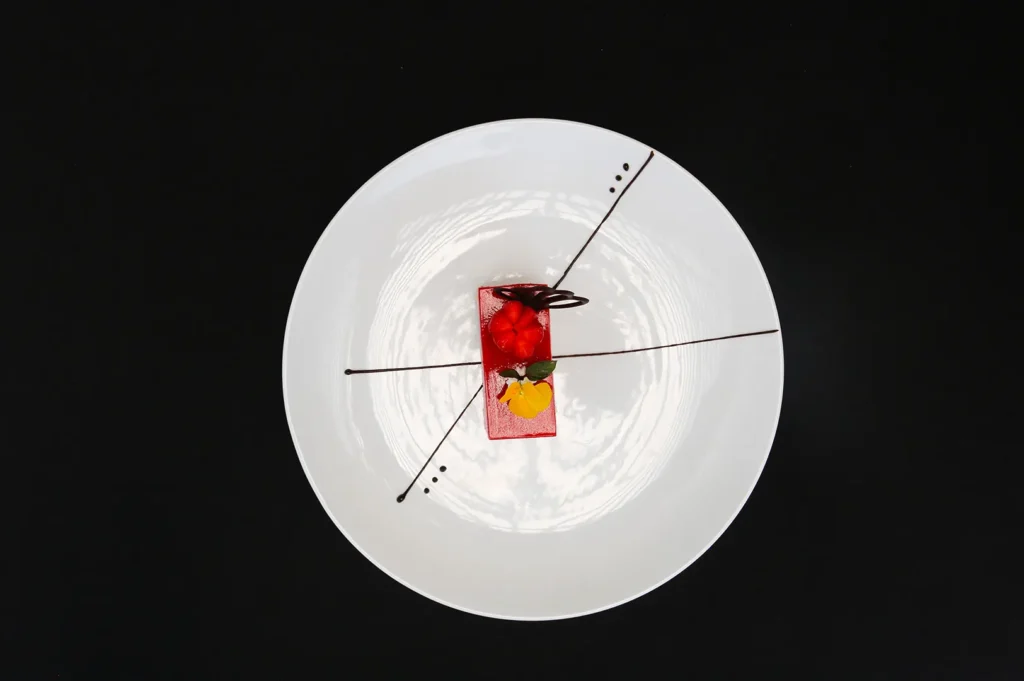
But overhead photographs can flatten height and make a large platter feel smaller if the frame is too tight.
We usually leave enough surface around the dish to show its footprint. If the platter is designed for four, placing four small bowls loosely around it can immediately make the scale clearer.
A slightly lower angle may work better for something tall, such as a seafood tower or stacked roast.
Our broader guide to building a consistent menu photography set explains how angle rules can stay coherent without forcing every dish into the same composition.
Do Not Fake Generosity
Restaurants naturally want sharing food to look abundant.
We do too.
But adding extra prawns, doubling the meat or using a smaller platter purely to make the serving look larger creates the wrong expectation.
Instead, we work with the real serving portion and arrange it so the quantity is visible. Pieces hidden underneath may be moved forward. Sauce can be redistributed. Garnish can be adjusted so it does not cover the protein.
The photograph should reveal the generosity already in the dish, not manufacture a new portion for camera.
Show the Serving Moment When It Helps
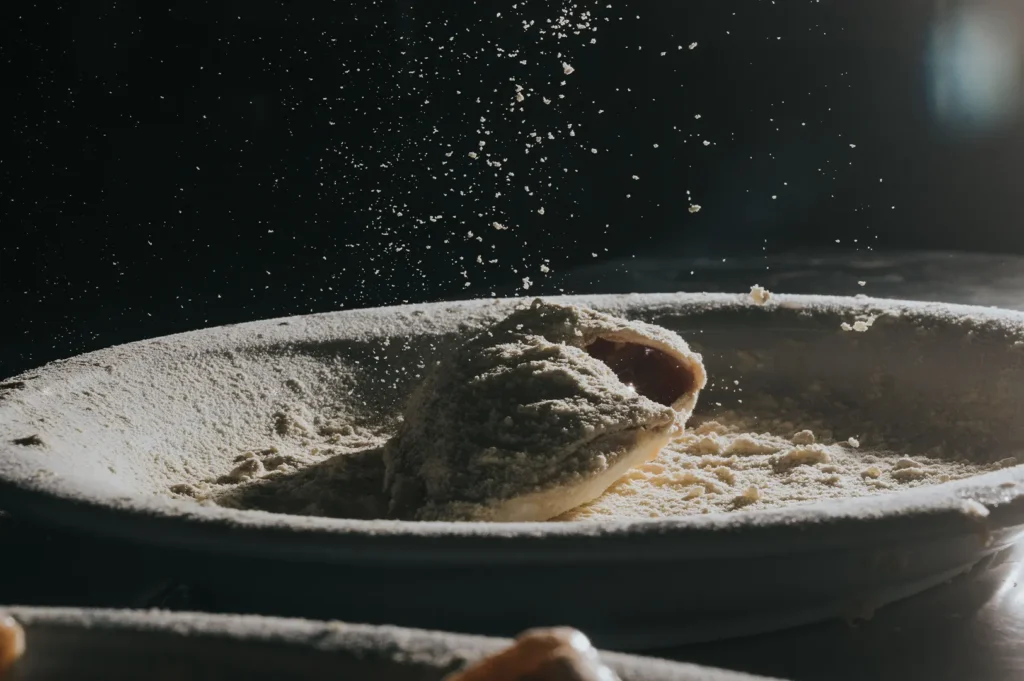
Some dishes make more sense once a hand enters the frame.
A spoon lifting noodles from a communal pot, someone serving rice beside a curry, or hands tearing bread around a shared spread can communicate scale and the intended dining experience.
Working with a food photographer for Singapore restaurants should include that discussion before the shoot. Is this image meant to show the menu item clearly? Sell a sharing set? Promote a gathering?
Those are slightly different photographs.
If customers are expected to split the food across the table, give them enough visual information to see that table in their head.
That is when scale stops being a technical photography issue and starts becoming part of the restaurant’s promise.